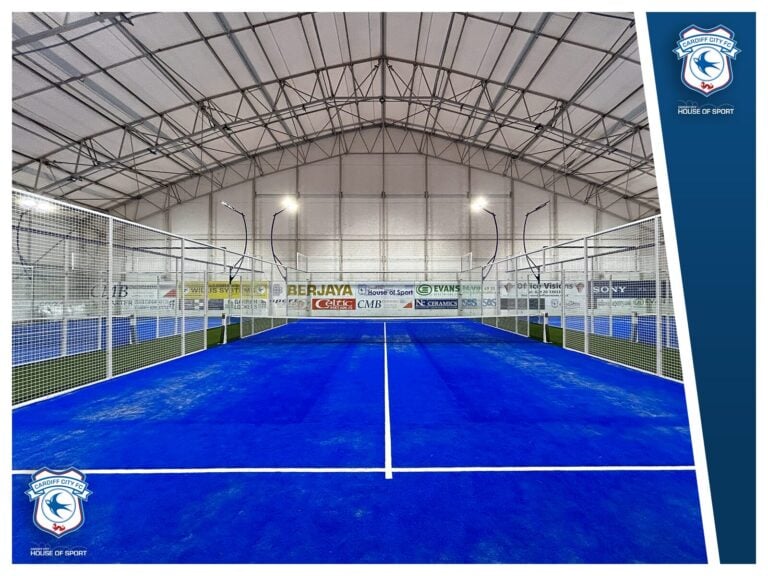
Padel is one of the best sports for families to play together. The smaller court, slower ball and doubles format make it accessible for children (some clubs take them from around five or six), while the enclosed walls keep rallies going and frustration low. Parents and kids can rally meaningfully within 15 minutes. Most UK and Bali clubs run family-friendly sessions, junior coaching pathways and parent-and-child rates. Junior-specific rackets are lighter and sized for smaller frames; check current prices. This guide covers why padel works for families, what equipment kids need, safety considerations and how to find family-friendly sessions. Last updated: April 2026.
Reviewed for accuracy by Ryan Spence, Padeli co-founder and movement specialist. The age and equipment guidance below is general advice for healthy children, not personalised medical recommendation. Speak to your GP or paediatrician before introducing any new sport, especially if your child has cardiovascular, joint or musculoskeletal concerns. The NHS guidance on physical activity for children and young people is a good baseline reference.
We get asked this a lot: “Is padel suitable for kids?” Our answer is always the same - not only is it suitable, it might be the best family sport available right now. Padel is the rare game where a parent and a seven-year-old can enjoy a rally together on the same court.
That kind of cross-generational play is almost impossible to find in most sports.
Here’s our complete guide to family padel - covering the age question, equipment, safety, and how to get your whole household started without anyone getting bored or overwhelmed.
Why Padel Works So Well for Families

The core reason padel is family-friendly comes down to its format. The game is almost always played in doubles - four players, sharing a court, working together. That immediately reduces the individual pressure on a child compared to singles sports like tennis or badminton.
The glass walls are another family advantage. Beginners - adults and kids alike - don’t have to constantly retrieve balls that have shot off court. The ball stays in play longer, rallies last longer, and everyone feels more involved in the game. That’s a big deal for a child’s first experience of a racket sport.
The court itself is also smaller and the racket is more forgiving. A solid perforated face with no strings means there’s no sweet-spot frustration - if you make contact, the ball goes somewhere useful. Kids get that satisfying feeling of hitting a proper shot much sooner than they would in tennis.
What Age Can Kids Start Playing Padel?
Some clubs accept children from around five or six years old, with adult supervision and the right equipment, so check each club’s policy. A formal approach to technique can wait - at that age, the focus should be entirely on having fun and developing basic hand-eye coordination.
From around nine years old, kids are generally ready for more structured play - group lessons, junior social sessions, and the beginnings of match practice. Many clubs worldwide run dedicated junior programmes from this age. The International Padel Federationpublishes the rules of the game, but we have not found a set of official junior formats.
There is no upper age limit. One of padel’s genuine selling points is that it’s playable across generations. We’ve seen families on court with three generations playing together - and that’s not unusual at a well-run padel club.
Equipment for Junior Players
Getting the equipment right makes a significant difference to a child’s early experience. Adult rackets are too heavy and too large for younger players - junior padel rackets are lighter, shorter, and designed with smaller grip sizes that suit children’s hands. Our junior padel rackets guide has the best options for each age.
Beyond the racket, ball selection matters. Low-compression or foam balls have less pressure than a standard padel ball - they travel more slowly, bounce more predictably, and give children more time to react. Most good clubs will have these available or can point you towards a supplier.
Session length is worth managing too. For younger children (under eight), 30 to 45 minutes is typically enough before concentration begins to drop. Older kids can handle full hour sessions comfortably. Short sessions done well are far more valuable than long ones where interest fades.
Safety: What to Know for Kids
Few injury studies exist for children, so treat claims of a low injury risk with caution. The enclosed court removes the risk of chasing balls into traffic or onto adjacent courts. The nature of the game - lots of movement, moderate impact - gives children plenty of exercise.
The playing surface is typically artificial grass or similar textured material with good grip, reducing the risk of slipping. The racket face is solid - there’s no strung frame to snap or cause injury. Research on padel injuries is mostly in adults: elbow tendinopathy is the most reported, and eye and fall injuries are also reported. Wear eye protection, supervise play and warm up.
How to Find Family Padel Sessions

Most established padel clubs now offer family-friendly time slots, junior group lessons, and specific sessions designed around mixed ability pairs. When you’re looking for a venue, ask specifically whether they run junior programmes or family sessions - these are different from standard adult open play and better suited to getting kids involved.
In Bali, venues like Simply Padel Sanur run kids sessions (ages 5-7 and 9-11), and Liga.Tennis Sanur has sessions for ages 10-18 on Wednesdays, 4-5pm. Bali Padel Academy has a kids’ playground on site alongside their courts, reflecting the family-oriented thinking of the venue. In the UK, the LTA’s padel network offers a Kids Padel elective for coaches working with younger players.
If formal junior sessions aren’t available at your nearest club, booking a court with another family is an excellent way to start. Two adults and two children on a padel court dimensions is a natural format - parents on one side, kids on the other, or mixed teams. The game accommodates that flexibility naturally.
Tips for Your First Family Padel Session
Keep the first session short and pressure-free. Arrive a little early so kids can get a feel for the court without the clock running. Let them explore - hitting the glass, feeding balls to each other, learning what the bounce feels like before you try any formal drills.
Forget the score for the first session. Rallying back and forth, getting the ball over the net and keeping it in play, is the most valuable thing you can do on day one. Competitive play can come later once the mechanics feel natural.
Celebrate contact, not results. For young players, every decent hit is worth positive feedback. The foundation of enjoying a sport for life is built in these early sessions, and how a child feels during those first hours on court shapes whether they come back or not.
Family Padel on Holiday
Padel is increasingly becoming part of the family holiday experience. Resorts and holiday destinations across Spain, Portugal, Italy and beyond have added padel courts alongside their pools and tennis facilities. If your family enjoys the sport at home, seeking out padel-friendly accommodation can add a brilliant activity to your trip.
Bali has emerged as a particularly family-friendly padel destination. Bali Padel Academy in Canggu welcomes families and has a kids’ playground on site.
The relaxed Bali atmosphere makes it easy to combine padel with beach days, cultural trips and general family downtime. For the full list of venues, see our Bali padel courts guide.
In Europe, the Spanish coast is the obvious choice. The Costa del Sol and Barcelona regions have hundreds of padel clubs, many of which run junior programmes during the summer months. Portugal’s Algarve is another strong option, with a growing number of padel resorts that cater specifically to families.
When booking a family padel session abroad, check whether the venue offers junior racket rental and whether they have a minimum age policy. Most clubs are happy to accommodate families, but calling ahead saves any surprises on the day.
Family padel FAQ
If padel runs in the family, our padel gift guide has presents at every budget, from stocking fillers to starter packs for new players.