Padel is a doubles racket sport played on a 20m x 10m enclosed court with walls in play. It is the world’s fastest-growing sport, played by over 35 million people across 150+ countries. Rules use tennis scoring, serves are hit underhand below waist height, and solid-faced rackets have no strings. Most beginners can rally and enjoy their first game within 30 minutes. Equipment costs £70-£200 to start (racket, shoes, balls), court hire from £14-£100 per hour depending on country, and group lessons typically cost £15-£25 per person. Last updated: April 2026.
Links to retailers on this page are affiliate links. If you buy through them, Padeli may earn a small commission at no extra cost to you. It never affects which products we recommend.
How do you play padel? The quick answer
Padel is a doubles sport played on an enclosed court where the walls are as much a part of the game as the net. If you’ve watched tennis or played squash, padel will feel familiar - but it’s distinctly its own game with rules, tactics and a pace that’s taken the world by storm.
Here’s what you need to know: four players compete on a 20m by 10m court enclosed by walls and glass panels. The scoring works like tennis (15, 30, 40, deuce). Your serve must be underhand and the ball must bounce first.
Walls are in play after a floor bounce, which opens up incredible angles you won’t find in tennis. Each side gets two serves per point, and games go to six with a tiebreak at six-all.
Unlike tennis, you’re restricted to one floor bounce before returning. The pace is easier on your joints, the learning curve is gentler, and the social aspect is unmatched.
If you’ve ever wanted to try a sport that’s fast, fun and easier on the body than tennis, padel is your answer.
Want to stay on the court longer? Our guide to padel injuries, prevention, and recovery covers the most common issues and how to avoid them.
The Padel Court - What You’re Playing On

The court is the foundation of padel. It’s smaller and more enclosed than tennis, and those walls are fundamental to how the sport works.
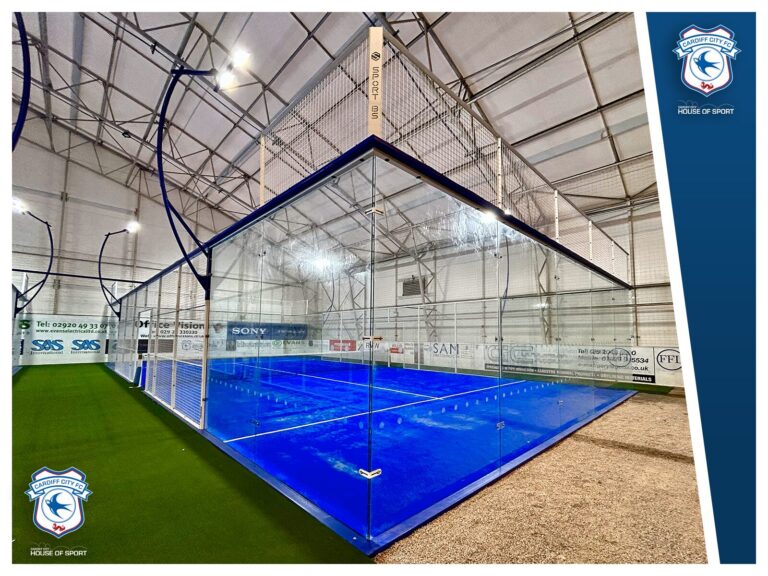
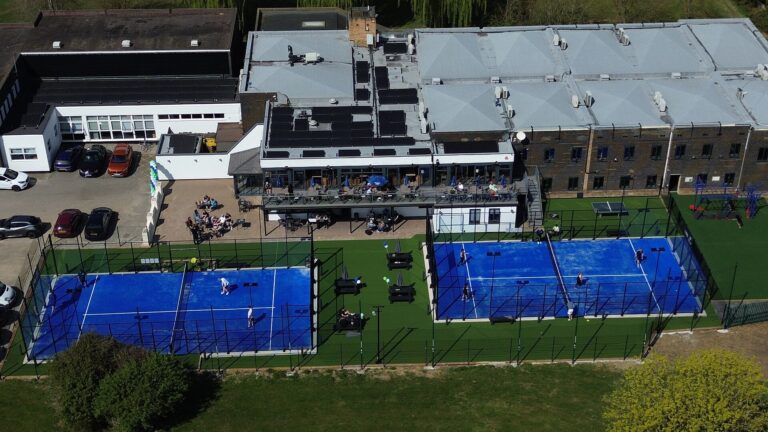
The court measures 20 metres long and 10 metres wide - exactly half the size of a tennis court in both dimensions. It’s completely enclosed by walls on the sides and ends, with glass panels making up portions of the boundary.
A net runs across the middle, set at 88 centimetres at the centre and a maximum of 92 centimetres at the posts.
Service boxes are clearly marked and divided by a centre line, just like tennis. The walls aren’t dead space - after a ball has bounced on the floor, it can hit any wall on your side and remain in play.
This is what makes padel tactically unique. You can use walls to extend rallies, change angles, and put pressure on your opponents in ways tennis doesn’t allow.
Equipment You’ll Need
Padel equipment is simpler than tennis, and beginners can start without investing much.
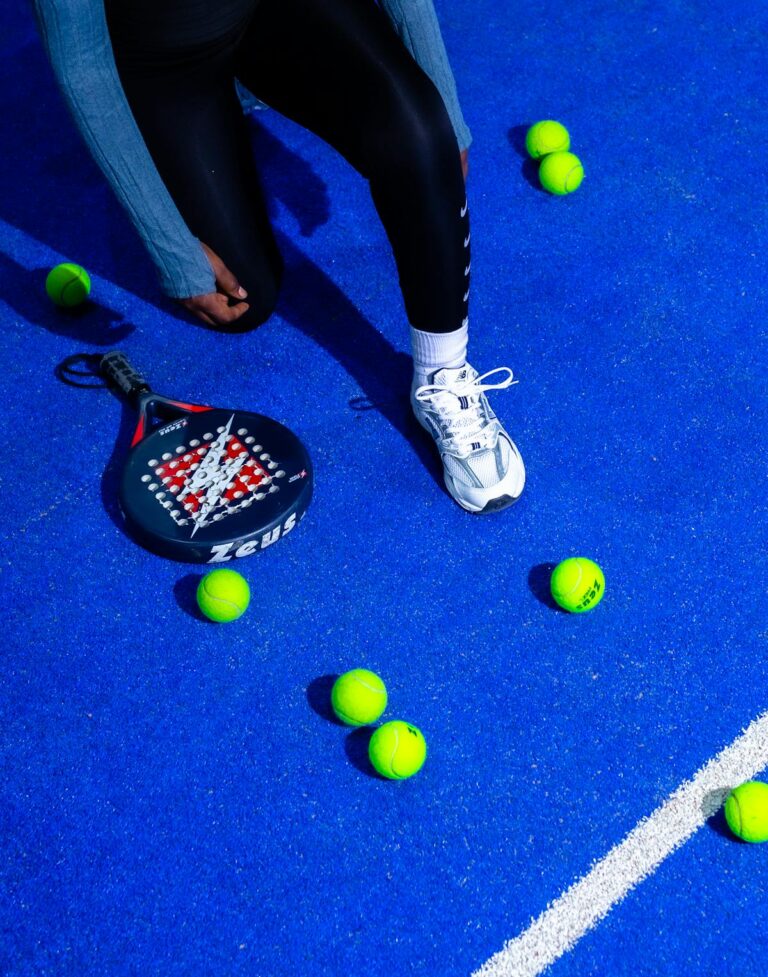
The racket is your biggest consideration. It’s a solid perforated face - no strings like a tennis racket - with a foam core inside. Most padel rackets weigh between 340 and 410 grams, which is heavier than a tennis racket (250-340g) but shorter.
The weight helps generate power without needing a massive swing. Most facilities offer rental rackets at modest cost (typically £3-£5 in the UK, equivalent rates elsewhere) if you don’t want to buy your own yet. Solid beginner rackets cost well under £100. In October 2026, Padel Nuestro had the Wilson Optix V1 from £50.96 and Padel Market had the Bullpadel Indiga CTR from £63.99, and our beginner racket guide has more picks.
Ready to upgrade your gear? See our guide to the best padel rackets for intermediate players in 2026 - tested picks by playing level and style.
The ball is similar in size to a tennis ball but designed specifically for padel. It has lower pressure than a tennis ball, so it bounces less and travels slower. This lower bounce makes the game more controllable and less punishing for beginners - you have more time to react. If you are wondering whether a tennis ball will do, our padel ball vs tennis ball guide has the answer.
For footwear, wear court shoes with non-marking soles. Running shoes won’t cut it because you need lateral support for the quick lateral movements padel demands. Most venues don’t have strict dress codes, so wear whatever sports clothing lets you move freely - shorts or leggings and a breathable top.
How Scoring Works in Padel
If you’ve played or watched tennis, padel scoring will feel instantly familiar. It uses the same point system, with one key difference: the match structure.
Points progress as Love (0), 15, 30, 40, then Game. If both teams reach 40-40, that’s called Deuce.
From deuce, the first team to win two consecutive points wins the game - one point gives you Advantage, and if you win the next, you take the game.
If the opponent wins while you have Advantage, you’re back to Deuce.
Once you have the basics, see our intermediate padel improvement guide - drills, tactical frameworks, and common mistakes to fix as you move up the levels.
Games are played to 6, but you need to win by 2 games. If the set reaches 6-6, you play a tiebreak instead of continuing indefinitely. The tiebreak goes to 7 points (win by 2), and whoever wins it takes the set 7-6.
A standard padel match is best of 3 sets. Win 2 sets and you’ve won the match. Professional matches sometimes go longer, but for most recreational and competitive play, three sets is the standard.
Serving Rules - Get This Right
The serve in padel looks nothing like tennis, and that’s one of the biggest adjustments beginners need to make.
Your serve must be underhand. This isn’t a choice - it’s a rule. You stand behind the service line (both feet behind it), hold the ball at waist height, and you cannot jump.
You drop or bounce the ball and strike it at the highest point of the bounce, with contact happening at or below waist height. This differs sharply from tennis, where an overhead serve is the standard.
The ball must bounce on the ground first, then you strike it. You don’t toss it high like in tennis. That controlled bounce is key to consistency - padel serves are about placement and control, not raw power.
You serve diagonally to your opponent’s service box, just like tennis. But here’s the critical rule: the ball must bounce in the service box before it can hit a wall. If it hits the wall before bouncing, it’s a fault. You get two serves per point, so if your first serve is a fault, you get a second attempt.
After you serve, move toward the net. This is key positioning that’ll improve your net game immediately. Watch where your opponent is returning the ball rather than admiring your serve.
The Return of Serve - You Cannot Volley
This is one of the biggest differences from tennis, and it catches beginners out constantly.
When receiving a serve, you must let the ball bounce first. You cannot volley the serve. The ball must hit the floor before you strike it. This gives the returner protection - the server isn’t going to ace you with a powerful drive. It also means the returner has time to react and position themselves properly.
This rule fundamentally changes how serves are structured in padel. Servers can’t rely on power to win free points. Instead, serving is about placement, depth and variation. You’ll see sliced serves that curve away, flat serves for consistency, and occasionally lob serves for depth.
Basic Rules of Play - Master These
Padel is always played in doubles. You will not play singles padel - it’s a four-person game, always.
The ball can only bounce once on the floor before being returned. If it bounces twice, that’s a fault and the point goes to the other team. This keeps rallies moving and prevents players from chasing balls that are effectively dead.
Walls are in play, but only after a floor bounce. This is fundamental to padel. Once your ball has bounced on your side of the court, it can hit any wall - the side walls or the back wall.
Wall contacts don’t count as bounces - only floor bounces count. You can bounce the ball off the wall multiple times, as long as it hasn’t bounced on the floor more than once, and eventually get it back over the net.
Here’s a critical rule that confuses new players: the ball must cross the net before hitting your opponent’s wall. If your shot hits your opponent’s wall before clearing the net, you lose the point. This prevents cheap winners off the wall on your opponent’s side.
Players can leave the court to play a ball that has gone over the glass, provided the court allows it. Some enclosed facilities won’t permit this, so check before you leap outside.
If a ball hits the net and still lands in the correct service box during a serve, it’s a Let - the serve is replayed with no penalty.
Common Misconceptions About Padel
Padel is growing fast, and with that growth come misunderstandings about how it’s played.
Padel is growing fastest in unexpected markets - our guide to padel in Australia covers the country’s booming scene, top venues, and where the sport is headed.
First: walls are not an out-of-bounds area. They’re part of the court. New players sometimes think hitting the wall means you’ve lost the point. You haven’t - the wall is in play and can be used tactically to extend rallies, drop shots, and angled attacks.
Second: padel is not squash. While both are played in enclosed courts, the rules are completely different. In squash, walls work differently, the ball bounces more, and singles play is standard. Padel’s lower-pressure ball, underhand serve, and doubles-only format make it an entirely different sport.
Third: the serve is not an overhead motion like in tennis or squash. It’s underhand. Many beginners carry tennis habits into padel, and standing up tall to serve will result in faults. Keep it low, controlled and focused on placement.
Fourth: walls don’t count as bounces. You can hit the wall as many times as you want (after the one allowed floor bounce) without losing the point. The only thing that ends your turn is the ball bouncing twice on the floor or going out of play.
Getting Started - What to Expect on Your First Visit

Most padel facilities worldwide welcome beginners and make the experience accessible.
When you arrive, the venue will assign you a court (typically booked in 60 or 90-minute slots). You can rent a racket and ball if you don’t have your own. Wear court shoes - non-marking soles are essential. Bring water and a towel, and if you’re playing during the day, sunscreen is wise even on an enclosed court.
Many facilities use the Playtomic app for booking, which simplifies the process. Some offer coaching, which can accelerate your learning curve dramatically. A single lesson from a certified coach can correct bad habits before they set in and give you patterns that’ll stick.
The learning curve for padel is gentle compared to tennis. Doubles play means you’re not covering the whole court alone. The lower ball speed and enclosed space mean more consistent rallies. You’ll have genuine fun from your first session, even if you’re making mistakes.
Beginner’s guide to padel FAQ
How many players are needed to play padel?
Is padel harder to learn than tennis?
Can I use a tennis racket to play padel?
Why do I have to serve underhand in padel?
Can the walls help me win points?
What’s the difference between padel and squash?
Know someone who has just started playing? Our padel gift guide has presents for new players, from a can of balls to a complete starter pack with a racket and a bag.