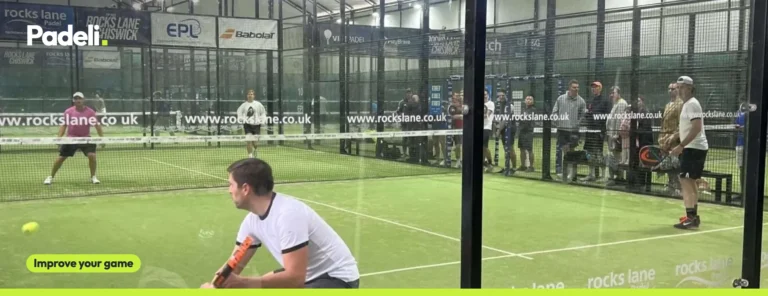
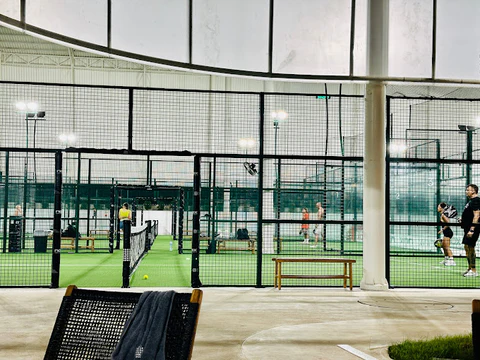
The glass walls are what make padel unique among racket sports. Learning to read wall angles, execute back-wall shots and time side-wall plays strategically is the single biggest skill gap between intermediate and advanced players. The rules are simple - after the ball bounces on the floor, it can hit any wall and stay in play. This guide covers when to cut off the wall versus letting the ball rebound, back-wall technique, side-wall angles, and the defensive lob from the back glass. Practise wall reads in solo drills 10-15 minutes per session.
How do you play off the walls in padel?
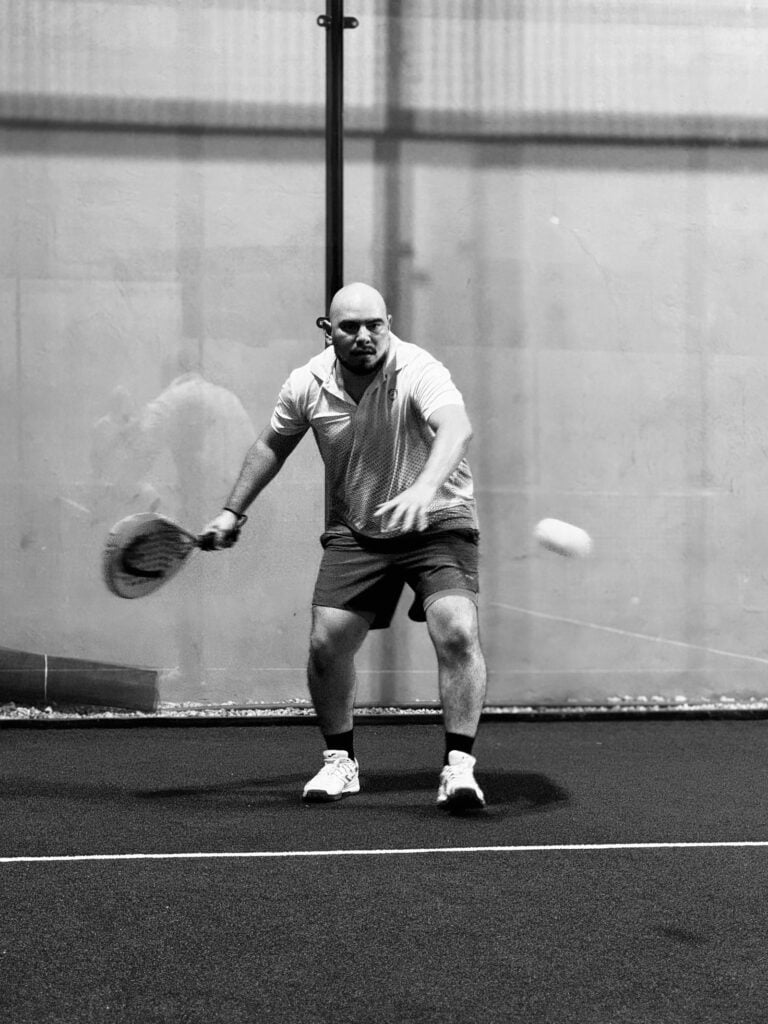
The walls are one of padel’s most distinctive features, and learning to use them separates casual players from those who understand the game.
Unlike tennis, where the ball is either in or out, in padel the glass walls are in play after the ball has bounced on the floor (see the FIP rules of play). This opens up entirely new tactical possibilities.
When the ball bounces on your side of the court and then hits a wall, you can still return it. The wall contact doesn’t count as a bounce - only floor bounces count. This means you get a second chance at shots that would be unreturnable in tennis, and it transforms the court’s dynamics completely.
The key question isn’t just ‘can I play off the wall?’ but ‘should I?’ That’s where the real skill comes in. Learning to read the ball’s trajectory, decide whether to take it before the wall or let it rebound, and execute the shot cleanly are the foundations of expert wall play.
Why Walls Change Everything
The presence of walls fundamentally changes padel strategy. In tennis, a lob over the baseline is a winner. In padel, that same lob often comes back at you off the back glass - sometimes with more pace than the original shot.
Walls create angles you won’t find in tennis. When a ball hits the side wall after bouncing on the floor, the rebound changes direction unpredictably. This forces you to stay alert and read angles constantly. It also creates opportunities: a well-placed shot can bounce off a side wall at an angle your opponents can’t reach.
Most importantly, walls give you defensive options. When you’re under pressure, the glass becomes your safety net. A defensive lob that bounces off the back wall can reset a rally and shift momentum back in your favour.
Back Glass Technique: The Foundation
The back glass is where most wall play happens, so let’s break down the technique. First, understand that this isn’t about standing at the baseline waiting for the ball to come to you. You need to move with the ball as it travels toward the glass.
Here’s what the pros do: as the ball approaches the back wall, you should move backward with it. Turn your shoulders to the side, take your racket back into the ready position, and adopt a sideways stance. Your weight should be on your toes, ready to react.
Now here’s the critical part: let the ball pass in front of you and rebound off the glass. The moment it bounces off the glass, step forward into the shot. Contact the ball in front of your body - never behind yourself. Your front leg drives forward as you make contact, transferring your weight into the shot.
This weight transfer is what gives the ball power and control. You’re using your legs and core, not just your arm. It’s similar to how you’d hit a groundstroke from the baseline, but with the glass doing some of the work for you.
The Decision: Take It Early or Let It Rebound?
Not every ball near the back wall should be played off the glass. Sometimes taking it early is the smarter choice. The decision depends on two factors: ball speed and height.
If the ball is slow and high near the back wall, take it before it bounces. You’ll have more control and can dictate the point from a better position. You don’t need the glass; the incoming shot is already under your control.
If the ball is fast and low, let it rebound. The glass gives the ball time to slow down slightly, and the rebound gives you a better contact point. A fast, flat shot that hits the glass low will bounce up to a more comfortable height for you to hit.
The key is reading the shot quickly and committing to your choice. Hesitation ruins wall play. Make your decision early and execute it fully.
Side Wall Play: Creating Angles
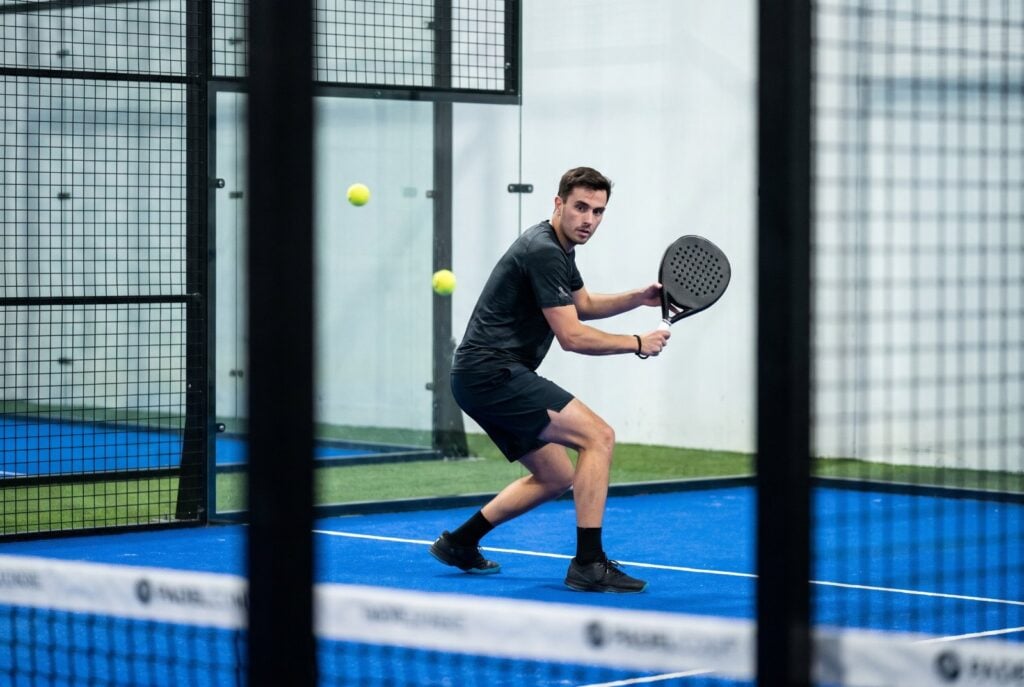
While the back glass dominates wall play, the side walls are equally important tactically. When a ball bounces on the floor and then hits a side wall, its trajectory changes dramatically. The rebound comes off at a different angle - sometimes sharper, sometimes softer, depending on where the ball struck the wall.
The skill here is twofold: first, read the angle of the rebound accurately. The ball isn’t coming straight at you; it’s coming at an angle that changes based on the approach angle and the ball’s spin. Second, position yourself to intercept it cleanly.
Think of the side wall as a passing option. If you hit a ball near the side wall, it might rebound at an angle your opponents can’t cover. Conversely, if an opponent hits a ball that bounces off your side wall, be ready to attack the rebound.
Common Mistakes That Kill Your Wall Game
Most wall play errors come from doing nothing when you should be moving. The biggest mistake is standing still. When a ball heads for the back glass, beginners plant their feet and wait. By the time the ball rebounds, they’re out of position and scrambling. Remember: move with the ball, don’t wait for it.
The second mistake is scooping the ball up from behind your body. When you contact the ball behind yourself, you lose power, control, and consistency. You’re also forced into a weak defensive position. Always step into the shot and make contact in front of your body.
A third trap is hitting too hard off the glass. The wall is already providing some pace; you don’t need to add more power. Focus on control and placement instead. A well-placed, controlled shot off the glass is far more effective than a wild smash that ends up in the net.
Practice Drill: Build Your Back Glass Confidence
Here’s a drill we recommend starting with. Feed balls to yourself off the back glass. Stand near the baseline and drop a ball toward the back wall. Let it bounce once on the floor, then once on the glass, then return it calmly over the net into the opposite court.
Start close to the wall and go slowly. Focus on footwork and contact point - not power. As you get comfortable, gradually increase your distance from the wall and increase the pace of your feeds. The goal is to build rhythm and confidence so that when match play happens, your wall shots feel natural.
This drill isolates wall play completely. Your only job is to move correctly, read the rebound, and return the ball. No pressure, no rallies, no tactical complexity. Just you, the ball, and the glass.
Defensive Lob from the Back Wall
Sometimes, being near the back wall means you’re under pressure. Your opponents are at the net, you’re scrambling, and you need to reset the rally. This is where the defensive lob from the back wall becomes your lifeline.
The technique is different from a standard lob. Open your racket face significantly - you want to hit underneath the ball. Use a low-to-high swing path, generating power from your legs and core rotation rather than your arm. Your shoulders and torso do most of the work; your arm guides the ball.
The goal is height and depth. You want the lob to clear your opponents at the net and land deep in their court, ideally near their baseline. A well-executed defensive lob off the back glass gives your team time to reset and return to a neutral position. It’s not a winner; it’s a pressure-release valve.