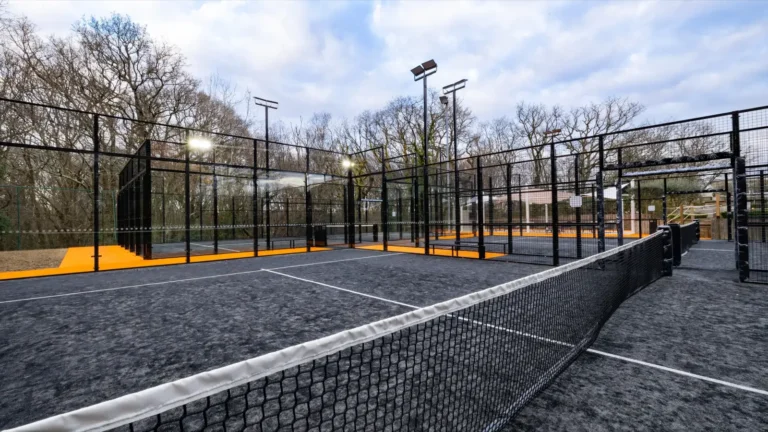
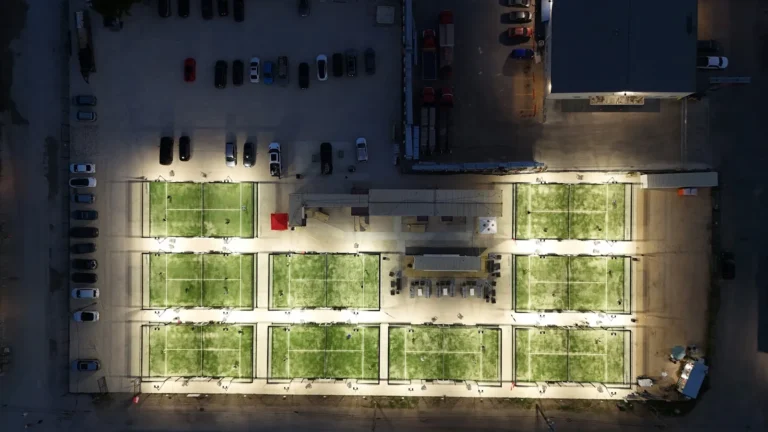
Building a official padel court in Bali costs $25,000-$65,000 for an outdoor court and $30,000-$91,000 for a covered (roofed) court in 2026. Glass panels are typically $10,000-$25,000 of the total, artificial turf $6,000-$12,000, lighting $2,000-$7,000, and foundation and groundwork $3,000-$10,000. Import duties and shipping add to the cost of imported glass and steel, which is why working with experienced local turnkey suppliers often works out cheaper than DIY builds. On-site construction takes 2-3 weeks per court, plus 4-8 weeks for ordering and shipping materials. Ongoing maintenance costs vary, so get quotes from local suppliers.
Construction cost ranges in this guide are reported industry estimates and 2026 supplier quotes. Final costs depend heavily on site conditions, supplier choice, and current import duties, which fluctuate. Always obtain at least three formal quotes from experienced local Bali contractors and consult an Indonesian business adviser before committing capital. Check building permits, local zoning and the rules on foreign ownership with that adviser too. This is not financial or construction-procurement advice.
If you are looking into padel business options in Bali, you need to know the costs. A single court is a big capital outlay. However, the costs are fairly standard around the world. Local factors like materials, specs, and site conditions will shift the final number. We’ve broken every cost line item below using current 2026 supplier quotes and Bali venue case studies.
Here is the headline figure: a standard outdoor court costs roughly $25,000 - $65,000 to build. Aggregated quotes from Bali venues sit in the middle of that range once import duties and covering are factored in. Tropical weather, import duties, and labour costs all shift the final price.
The Cost Breakdown: What You’re Paying For
Breaking down the $25,000 - $65,000 range shows where your money goes. The line items are separate indicative ranges, so they will not add up exactly to the headline figure.
- Foundation and ground preparation: $3,000 - $10,000. This covers site levelling, drainage, and preparing the base to precise specifications.
- Metallic structure/frame: not itemised in this guide, so ask suppliers to quote it separately. The steel frame provides the skeleton for glass panels and court boundaries.
- Tempered glass panels: a major cost component, typically $10,000 - $25,000 per court for standard specifications. Glass is usually imported and subject to import duties.
- Artificial turf surface: $6,000 - $12,000 depending on turf type. Three main types exist: fibrillated (standard, lower durability), monofilament (longer-lasting, recommended for intensive use), and textured/crimped (premium, used in professional tours).
- Sand infill: $1,000 - $2,000. Sand infill affects ball bounce and player safety. Regular top-ups are needed over time.
- Lighting system: $2,000 - $7,000. LED floodlights are standard for evening play. More courts and brighter lighting cost more.
- Installation labour and shipping: variable, typically 15 - 25% of total cost, though labour is lower in Bali than Europe/USA.
Covered vs. Open-Air Courts in Bali

Bali’s tropical climate makes court covering a must. During monsoon season (November - March), rain is frequent and heavy. As a result, open-air courts can sit unused for days at a time.
A covered or semi-indoor court adds 20 - 40% to base costs. Instead of $25,000 - $65,000 for open air, expect $30,000 - $91,000 for a covered build. However, Bali venues that run year-round say this extra spend pays for itself.
Most successful Bali venues invest in at least partial coverage. The premium cost is recouped through higher court bookings during rainy season.
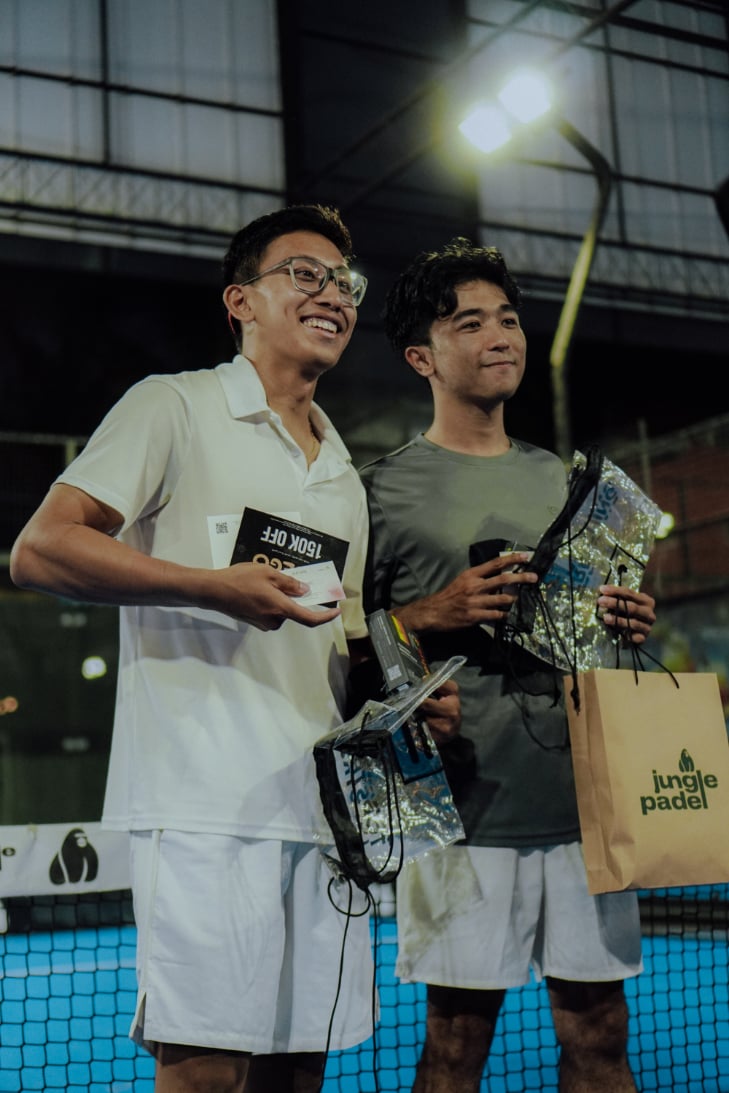
Artificial Turf: The Heart of Your Court
The playing surface matters for both performance and how long your court lasts. Three main turf types exist in modern padel.
Fibrillated turf: the most common and most affordable option. It’s been the industry standard for years. Fibres are split/fibrillated, creating a web-like surface. It’s fast, sand adheres well, and is cost-effective. Downside: fibre wear reduces durability to approximately 4 - 6 years with heavy use.
Monofilament turf: individual solid fibres that stand upright. It’s more durable than fibrillated (10+ years), plays slightly slower due to upright fibre construction, and is recommended for venues expecting intensive daily use. Cost is higher than fibrillated.
Textured/crimped turf: the premium option, used on Premier Padel circuits. It provides optimal cushioning and long-term durability, requires less sand infill (7 - 8 kg/m2 vs 15 kg/m2 for conventional), and costs significantly more.
For a Bali business, fibrillated or monofilament are sensible choices balancing cost and durability. Textured turf is premium territory for high-end resort venues.
Import Duties and Bali-Specific Costs
Bali-specific factors increase your total cost compared to building in Europe or the USA. Tempered glass panels are nearly always imported and subject to Indonesian import duties. Steel structures and turf may also face duties depending on sourcing.
In general, labour costs in Bali are lower than in Western countries. This gives you a cost edge. However, you will need skilled suppliers since many imported parts need specialist fitting.
Shipping and logistics add real costs. Materials shipped from Europe or Asia bring freight, handling, and customs charges. Budget for these carefully.
Land costs vary a lot by location. Premium spots in Canggu and beachside areas cost more. Ubud and semi-rural areas are much cheaper. This is separate from court costs but still part of your total spend.
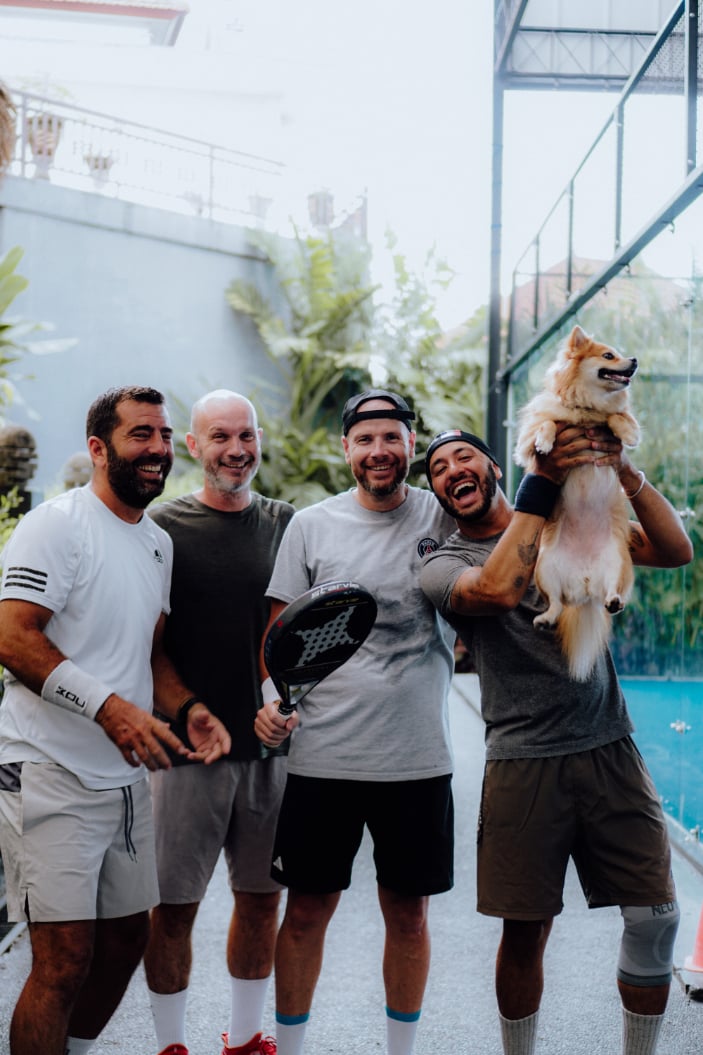
Construction Timeline
Court building follows a fairly standard process. From start to finish, expect 2 - 3 weeks per court. This assumes:
All materials are in hand before construction starts (ordering and shipping can add 4 - 8 weeks before site work).
Ground conditions are suitable (if you need significant remedial work, add 1 - 2 weeks).
No unusual delays or weather issues (monsoon season makes scheduling unpredictable).
Your supplier is experienced and has skilled labour.
Ongoing Costs: Maintenance and Replacement
Full turf replacement costs roughly $3,000 - $6,000 per court, typically needed every 4 - 10 years depending on turf type and usage intensity. Heavy use shortens lifespan; lighter use extends it.
Artificial turf maintenance is the primary recurring expense. Annual costs vary by venue and supplier, typically covering regular brushing to redistribute sand infill, periodic sand top-ups, and minor repairs. Get quotes from local Bali suppliers for current figures - neglect accelerates deterioration.
Glass panels may need replacing over time, with individual panel damage absorbed through a spare-panel budget rather than full re-glazing. Replacement cost varies with glass grade and supplier - check directly with your installer.
Other ongoing costs include lighting maintenance and occasional bulb replacement, glass panel cleaning, and general wear and tear on the structure. Budget for these annually based on quotes from your local suppliers rather than international averages.
Cost-Saving Strategies and Trade-Offs
You can source alternative glass suppliers or use local steel fabrication to cut costs. Some builders offer package deals that bundle structure, glass, and turf at a lower combined price.
Start with 1 - 2 courts, not 4 - 6. Expansion is possible once core operations are profitable.
Phased construction lets you start with one or two courts and add more as revenue grows. This spreads the capital outlay and lowers your initial risk.
Open-air courts (no coverage) cost less upfront, though they’ll have lower utilisation during rainy season. Semi-indoor (partial cover) is a middle path.
Use established suppliers with experience in Bali - imported materials from unfamiliar sources create risk and delay.
Invest in quality from the outset. Cheap turf or poor-quality glass leads to earlier replacement and higher lifetime costs.
Financing Your Court Investment
Bali padel courts are typically funded through private investment, either personal capital or small investor groups. Traditional bank loans for sports facilities can be hard to get in Indonesia.
Many Bali business owners use a combination: personal capital for 30 - 50% of costs, plus bank loans or investor backing. Interest rates for business loans in Indonesia vary; shop around.
Some operators build and operate their first 1 - 2 courts, establish profitability, then use profits and retained earnings to fund expansion.
Is the Investment Worth It?
Padel court investment in Bali makes sense if you pick the right location and run it well. Court hire rates at Bali venues range from around IDR 175,000 per hour at lower-cost Ubud venues to over IDR 500,000 per hour at premium facilities in Seminyak and Canggu, with Bali’s provincial average sitting near IDR 430,000 per hour in 2025.
A busy venue can generate strong returns.
A poorly-located court with low utilisation may never achieve profitability. Success hinges on location, management quality, and revenue diversification. Build your business plan carefully before committing capital.