Starting a padel business in Bali requires navigating Indonesian business regulations (PT PMA for foreign investors), securing land or long-term leasehold, and budgeting roughly USD 25,000-65,000 per court for construction. The market is growing fast - published court counts for Indonesia vary by source - but competition is increasing in Canggu and Ubud, and thorough local due diligence on permits, licensing and zoning is essential. Operating a four-court venue typically requires USD 180,000-320,000 total capital for mid-market builds (premium flagships run higher). Profitability depends heavily on court utilisation. Last updated: October 2026.
This guide covers business cost estimates, foreign-investment structures, regulatory requirements and revenue projections for informational purposes only. It is not legal, tax or financial advice.
Indonesia’s investment rules and capital thresholds change frequently. Anyone considering a padel-business venture in Indonesia should engage a qualified Indonesian business lawyer (for PT PMA setup), a local tax adviser and an experienced padel-construction contractor before committing capital.. We’ve structured this guide around the questions prospective Bali padel investors actually ask, from PT PMA formation through to court count economics.
The Bali padel opportunity in 2026
Bali’s padel market has exploded in just four years, transforming from zero dedicated courts to many venues. This growth reflects extraordinary market demand - from expats seeking familiar activities, to digital nomads looking for community, to tourists searching for active experiences.
Indonesia is one of Southeast Asia’s fastest-growing padel markets, although published court counts vary by source. Within Indonesia, Bali remains the island destination with the highest concentration of courts and the strongest market fundamentals.
If you’re considering launching a padel business in Bali, the timing is compelling. The market is clearly established but still growing. Successful venues are profitable. Competition exists but isn’t yet saturated. This is the window for thoughtful, well-executed entrants.
Market Demand: Who Is Playing Padel in Bali?
Bali’s padel players split into several overlapping groups. First, expats - often from Europe, USA, or Australia - who’ve played padel in their home countries or picked it up quickly in Bali. Many have disposable income and seek regular play.
Second, digital nomads and remote workers who view padel as a way to stay active, build social connections, and structure their week in a new location. This demographic is highly committed to the sport during their time in Bali.
Third, tourists - increasingly seeking active experiences beyond beaches and temples. Padel appeals to active holiday-makers aged 25-60 who want something fun, accessible, and social.
Fourth, Indonesians, particularly younger professionals and affluent families in Jakarta and other urban centres, who travel to Bali for weekend padel breaks or holidays combining leisure with activity.
This diverse demand base means successful Bali venues have built loyal local communities, attract repeat tourists, and draw players from across Indonesia.
Court Construction Costs: Your Primary Investment

The largest capital expenditure for a padel business is court construction. A single outdoor court costs roughly $25,000 - $65,000 to build, with typical mid-market projects landing around $40,000 - $50,000. The final figure varies with materials, specifications, and whether the court is covered or open-air.
Most successful Bali venues opt for covered or semi-indoor courts to provide rain protection during the tropical monsoon season. Covered courts add 20 - 40% to the base construction cost, so expect $30,000 - $91,000 for a covered court.
Foundation and ground preparation typically run $3,000 - $10,000 depending on soil conditions. The construction timeline is standardised - count on 2 - 3 weeks per court from commencement to completion.
Court Specifications and Components
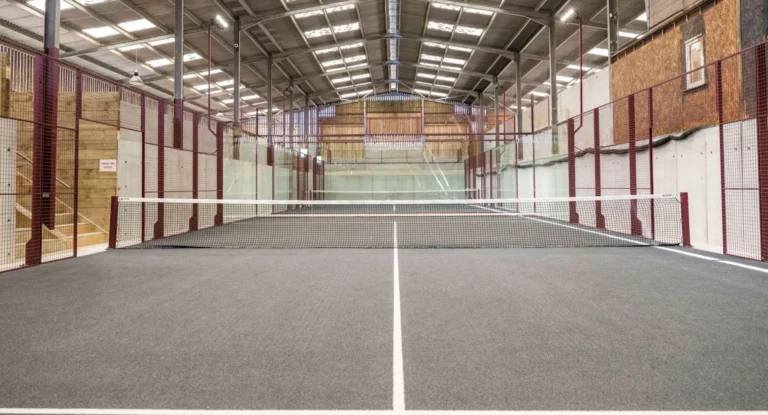
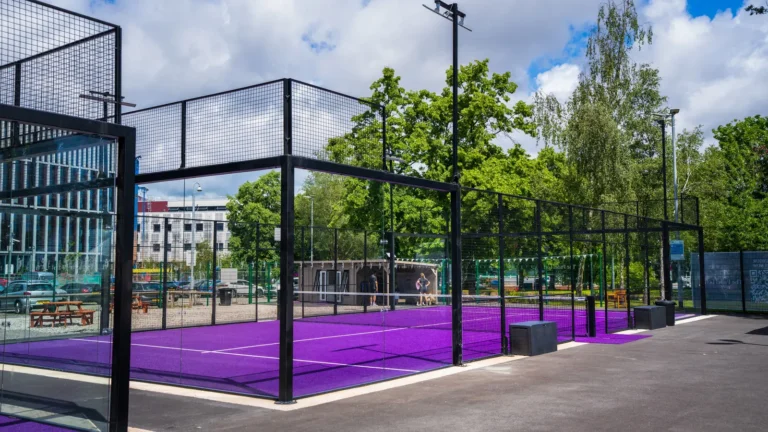
A standard padel court is 20 metres by 10 metres. The key components you’ll need are: a metallic steel structure/frame, tempered glass panels for the walls, artificial turf with sand infill, and lighting (typically LED floodlights for evening play).
The artificial turf is a major cost component and comes in different types. Most Bali venues use conventional fibrillated or monofilament artificial turf with sand infill. The sand infill is essential - it affects play speed and player safety.
Tempered glass panels are another significant cost and are generally imported, meaning import duties and shipping costs apply in Bali. Pricing is usually calculated on a per-court basis by construction partners.
Revenue Streams: How Bali Padel Venues Make Money

Successful Bali padel venues don’t rely on court rental alone. The most profitable venues combine multiple revenue streams, which diversifies income and maximises court utilisation.
Court rental is your primary revenue stream. Bali’s leading venue, Bali Padel Academy (BPA), charges IDR 150,000 per person for a 60-minute session (IDR 195,000 for 90 minutes). With four players on court, a busy peak hour brings in roughly IDR 600,000 per court.
Operating 16 hours per day (7am - 11pm) at 80% occupancy, a single court could generate around IDR 7.7 million per day, or about IDR 230 million per month (~$14,400 USD at roughly IDR 16,000 to the dollar), if every hour sold at the peak price. Scale that to a 4-court venue and court rental alone could produce around IDR 920 million per month (~$57,600 USD). This is an illustration, not a forecast: it ignores off-peak pricing, rent, staff and other costs.
Coaching is a high-margin revenue stream. At BPA, private individual lessons run from around IDR 1.2 million per hour with an instructor up to IDR 1.4 million per hour with a head coach.
Group clinics (2 - 4 students) range from roughly IDR 200,000 to IDR 550,000 per person. Most venues employ 2 - 3 coaches to meet demand, and lesson fees typically bundle court rental, rackets, and balls.
Racket rental generates steady ancillary revenue at around IDR 50,000-100,000 per session for guests who arrive without equipment. A pro shop selling rackets, shoes, and accessories adds another margin, though startup inventory costs are significant.
Food and beverage is where the most successful Bali venues differentiate themselves. Nearly all established Bali padel venues (such as BPA and Bam Bam) have cafes, bars, or restaurants. F&B is a significant revenue line and dramatically improves player retention and off-court experience.
Events and tournaments create buzz and drive court usage. Corporate team-building events are another revenue opportunity, particularly in Bali where international companies regularly hold retreats.
Memberships and packages encourage regular play and create predictable recurring revenue. BPA, for example, offers tiered credit packs (paying IDR 3 million, 5 million or 10 million upfront in exchange for bonus credit), strengthening loyalty and cash flow.
Total Investment: What It Actually Costs
Expect total setup investment of USD 180,000 - 320,000 for a mid-market 4-court facility. This breaks down roughly as: land deposit and lease, court construction (USD 120,000 - 240,000), non-court infrastructure (USD 20,000 - 40,000), equipment and furnishings (USD 10,000 - 15,000), and working capital for 3 months of operations (USD 20,000 - 30,000).
Land is your biggest variable. In popular areas like Canggu, commercial land lease prices vary widely and are usually quoted per are per year, with prime locations near Batu Bolong or Berawa at the top end. Get current quotes from local agents.
Ubud and semi-rural locations are significantly cheaper. Your lease structure - whether a long-term upfront payment, annual lease, or revenue-share arrangement with a landowner - will dramatically affect your initial capital requirement.
At the top end, a premium venue costs considerably more. A flagship on the scale of Bali Padel Academy in Canggu - 7 covered panoramic courts with a full restaurant, recovery area, pro shop, infinity pool and NOX Future Academy partnership - sits squarely in the multi-million-dollar bracket once land, build-out, equipment, staffing and working capital are totalled.
That end of the market is only viable with experienced operators and meaningful capital.
Business Considerations for Foreign Investors
Foreign investors typically operate through a PT PMA (Penanaman Modal Asing) structure. A PMA allows up to 100% foreign ownership in sectors on Indonesia’s Positive Investment List, which includes sports and recreation activities - so a padel venue can, in principle, be fully foreign-owned without a local partner.
Always check the latest Positive Investment List and your specific KBLI classification with a local advisor before committing. Also budget for a building permit (PBG), local zoning (RDTR) checks and the local tax on court rental (PBJT).
There are important capital requirements. Under BKPM Regulation No. 5 of 2025, a PT PMA must have a total investment plan of more than IDR 10 billion (~$625,000 USD) per 5-digit KBLI code per project location, excluding land and buildings.
The paid-up capital requirement was reduced to IDR 2.5 billion (~$156,000 USD) per PMA - the rest can be realised progressively against the business plan. The company needs at least one Director and one Commissioner. Sector rules can set higher requirements, so check the regulation text with your adviser.
Foreigners cannot own freehold land (Hak Milik) in Indonesia, but a PMA company can hold building rights (Hak Guna Bangunan) or use rights (Hak Pakai), and many venues operate via long-term leases. Do not rely on nominee arrangements. This is a complex legal area that changes regularly - always consult a local business lawyer specialising in foreign investment before proceeding.
Location strategy matters. Canggu and Uluwatu attract tourists and affluent expats - high foot traffic but high property costs. Ubud and semi-rural areas have lower costs but smaller daily visitor pools. Mixed demographics are ideal - expats for regular play, tourists for volume.
Operational Essentials for Success
Staffing matters. You’ll need court managers, maintenance staff, coaches, and F&B personnel. Hiring, training, and retaining quality staff is often the biggest operational challenge.
A professional booking system is essential for managing court reservations, coaching slots, and revenue tracking. Playtomic is popular globally; many Bali venues use it or similar platforms.
Regular marketing through social media, partnerships with hotels and retreat operators, and presence on Padeli.com (the global padel directory) are essential for visibility.
Community building through weekly social sessions, monthly tournaments, and player events creates loyalty and turns casual visitors into regulars.
Profitability and Timeline to Break-Even
With realistic total investment running roughly $180,000 - $320,000 for a simple mid-market 4-court venue and $500,000 to well over $1 million for a flagship with F&B, recovery areas and premium build, the break-even timeline matters.
A well-run venue with strong court utilisation, coaching revenue, and F&B can reach operational profitability within 18 - 36 months - but recovering the full capital investment takes longer, particularly when land lease costs are factored in.
Court utilisation is the critical metric. At 80% occupancy with BPA-level pricing, a single court could generate around IDR 230 million per month before costs.
A 4-court venue producing IDR 900+ million per month from court rental, plus coaching, F&B, and ancillary revenue, has a solid revenue base. But operating costs - staff, maintenance, lease payments, utilities, marketing - are substantial in Bali’s competitive hospitality market.
F&B and events accelerate profitability significantly. Venues with strong F&B components typically achieve profitability faster than court-only models, and the post-game social culture in Bali makes F&B a natural revenue multiplier.
Is Now the Right Time to Start a Padel Business in Bali?
The answer depends on your specific location and execution quality. Bali’s padel market is clearly established - demand exists, players are active, and visitors seek courts. But the market is no longer wide-open.
Canggu and beachside areas have several established venues. First-mover advantage has passed. However, secondary locations (Ubud, Sanur, semi-rural areas), or venues with particularly strong F&B or event programming, still have strong opportunities.
If you can secure a good location, build a quality facility, combine multiple revenue streams (especially F&B), and create a welcoming community, a padel business in Bali can be profitable and rewarding. The market fundamentals are sound.