The most important rule in padel strategy and positioning is simple - the team at the net wins roughly 70-80% of points. Every tactical decision should be about getting you and your partner to the net or stopping your opponents from getting there. This guide covers court zones (front, middle, back), positioning patterns (one-up-one-back versus both-at-net), doubles tactics (lobs to push opponents back, bandejas to maintain net position) and common mistakes (overhitting, splitting up, abandoning the net). Communication and the lob are your two most underused weapons. Last updated: April 2026.
Why the Net Is Everything in Padel


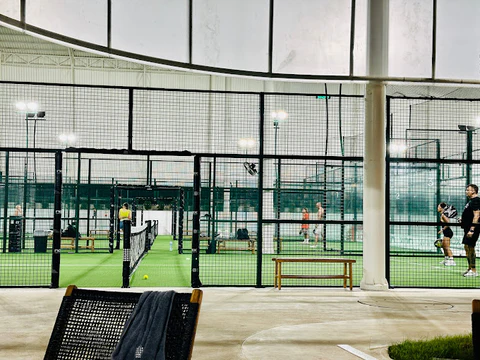
Unlike tennis, where baseline play can be a winning strategy, padel is built around net dominance. The enclosed court with glass walls means that powerful shots from the back are easy to retrieve - the walls keep the ball in play.
But at the net, you can hit volleys and smashes at sharp angles that your opponents cannot reach. This is why the team controlling the net wins the majority of points at every level of the game.
Every tactical decision in padel should answer one question: how do I get both players to the net, or how do I stop my opponents from getting there? Once you understand this principle, the rest of padel strategy starts to make sense.
If you are new to the sport and still learning the basics, our rules guide and beginner’s guide are good starting points before diving into tactics.
The Three Court Zones
One of the most useful frameworks for understanding padel positioning is to think of the court in three zones, each requiring a different mindset and shot selection.
The attack zone is the area close to the net, roughly from the net to the service line. When you are here, you are in the dominant position. Your job is to finish points with volleys and smashes, or to maintain pressure until an opportunity arises. Stay low, keep your racket up and be ready to react.
The transition zone is the middle of the court, between the service line and roughly two metres behind it. This is the most dangerous place to be caught standing still. You are too far from the net to volley effectively and too close to the back wall to play comfortable defensive shots.
Move through this zone quickly - either forward to the net or back to the baseline. Do not linger here.
The defence zone is the back of the court, from roughly the last three metres to the back wall. When you are here, your goal is to stay in the point and look for opportunities to move forward.
Use lobs, slow balls and high returns to buy yourself time. Do not try to win points from the back - focus on neutralising your opponents’ attacks and waiting for the right moment to advance.
Doubles Positioning - Move as a Pair
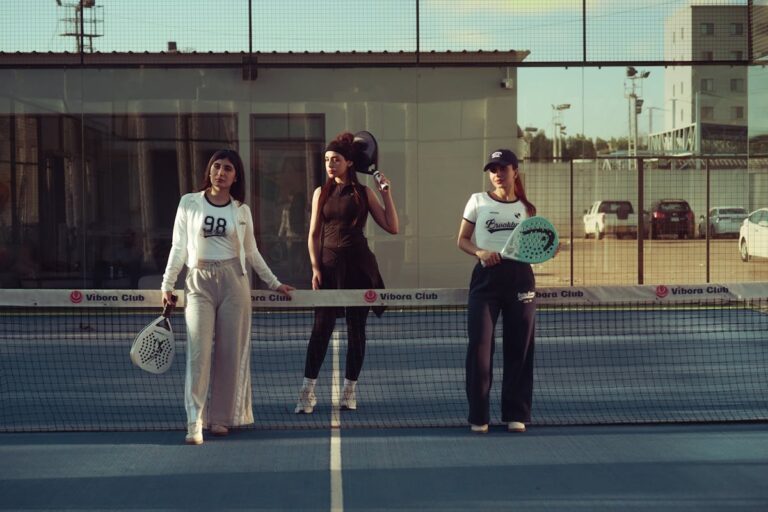
Padel is always doubles, so positioning is about teamwork, not just individual movement. The golden rule is to move together - both players should be at roughly the same depth on the court at all times.
If one player is at the net and the other is at the back, there is a huge gap in the middle that your opponents will exploit.
When both players are at the net, each covers half the court laterally. Stay about two metres from the net with your racket up, ready to volley. When both players are at the back, each covers their side of the court and communicates about balls down the middle.
The key principle is to advance to the net together and retreat together. Never leave your partner stranded.
Communication is essential. Call “mine” or “yours” on every ball, especially those hit down the middle. Many recreational points are lost because both players go for the same ball or both leave it. Talk to your partner constantly throughout the match.

The Lob - Your Best Friend
The lob is arguably the most important tactical shot in padel. A good lob over your opponents’ heads forces them to retreat from the net, giving you the chance to move forward and take the dominant position. It is the primary weapon for switching from defence to attack.
Aim your lobs high and deep - ideally landing close to the back glass wall. A lob that bounces and then hits the glass high up is very difficult to play offensively.
Your opponents will be forced to hit a defensive shot from deep in the court, giving you time to establish yourself at the net. Practice the lob more than any other shot - it will win you more points than anything else at club level.
When to Attack and When to Wait
One of the biggest mistakes at beginner and intermediate level is attacking too early. Padel rewards patience. Watch the Premier Padel top pairs and you will see the best players build points gradually, moving their opponents around the court and waiting for a clear opportunity before going for a winner.
From the net, attack when the ball is above the level of the net and you have a clear angle. If the ball is below net height, play a controlled volley back into play rather than trying to force a winner.
The overhead smash is your finishing weapon - use it when the ball is high enough to hit downward with power.
But even then, placement beats raw power. A smash aimed at the side glass wall or between your opponents is more effective than a ball hit as hard as possible at no particular target.
From the back of the court, resist the temptation to go for aggressive passing shots. The glass walls mean your opponents can usually retrieve hard-hit balls. Instead, use well-placed lobs and slow, controlled shots to work your way back to the net. Patience from the back and aggression at the net - this is the rhythm of good padel.
Common Strategic Mistakes
Staying at the back when you should be advancing to the net is the number one mistake. Many beginners are comfortable at the back of the court but reluctant to move forward. You need to break this habit - padel is won at the net.
Hitting too hard is the second most common error. Power is less important in padel than in almost any other racket sport. The walls keep balls in play, so hard shots just come back to you at speed.
Focus on placement, spin and control instead. Other common mistakes include standing in the transition zone (move through it, don’t stop), not communicating with your partner, and serving and staying at the back instead of following your serve forward.
Practice drills for better positioning
Understanding positioning theory is one thing - building the habit is another. These drills will help you internalise good court positioning until it becomes automatic.
The zone drill divides the court into four zones: net left, net right, baseline left and baseline right. Play a set where you consciously name your zone after every shot. This simple awareness exercise forces you to think about where you are on court rather than just reacting to the ball.
The net rush drill focuses on the transition from baseline to net. Start every point from the baseline and work to get to the net as quickly as possible. Count how many shots it takes you to earn the net position. Over time, aim to reduce that number by choosing smarter approach shots.