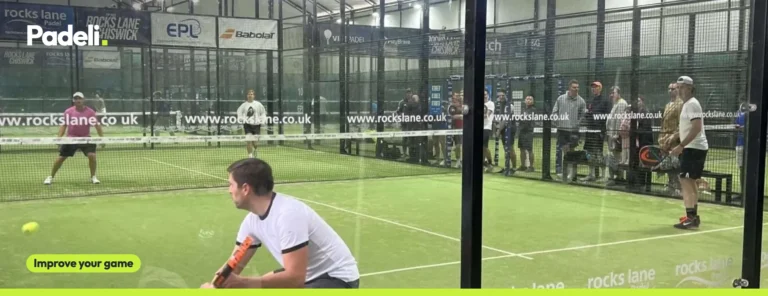
The padel volley is a short, compact shot played before the ball bounces. Use a continental grip, keep your wrist firm and guide the ball with placement rather than power. Stand about 2 metres from the net with your knees bent and racket up. In doubles, both players should hold the net together and move as a unit. This guide covers the full technique, positioning, common mistakes and drills to sharpen your volley game.
How do you volley in padel?
The volley is the most frequent shot you’ll hit in padel, and it’s nothing like a tennis volley. Many newcomers to padel assume the volley should be a sharp, punchy stroke - but that’s exactly where they go wrong. At Padeli.com, we want you to understand that the key to consistent net play is control, not power.
A padel volley should be short and compact. Think of it as guiding the ball rather than hitting it hard. The idea is to keep the rally under control, maintain your net position, and put pressure on your opponents through placement and pace variation - not by trying to crush every volley.
In this masterclass, we’ll break down the exact technique you need to master the volley, show you where to stand at the net, and explain how both players work together in doubles to dominate net play.
Volley technique - the fundamentals
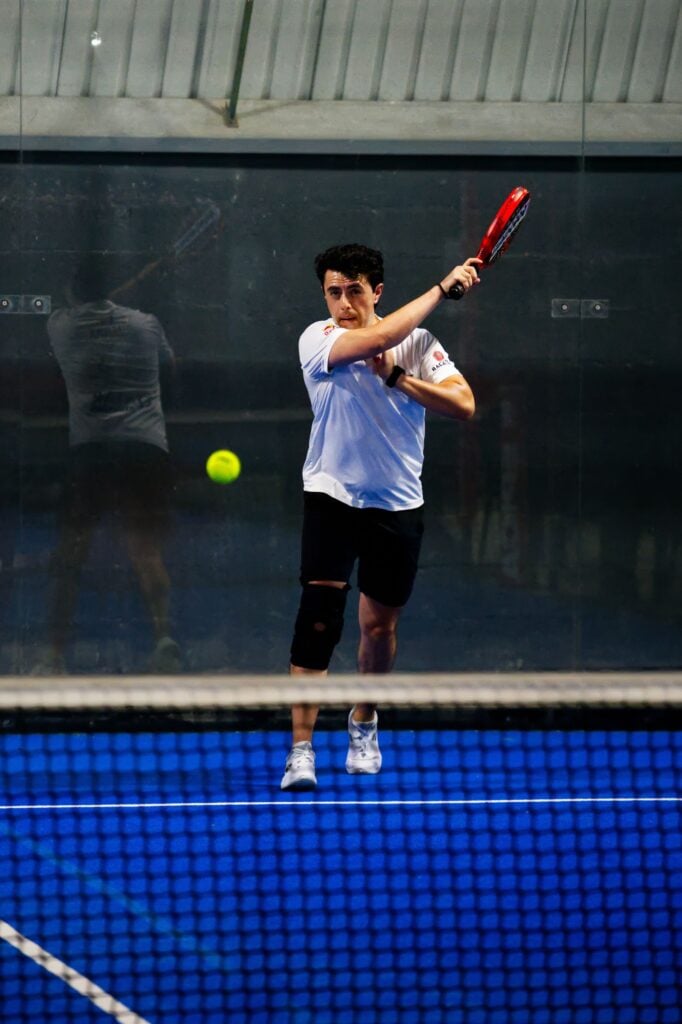
A padel volley is fundamentally different from a tennis volley, and understanding this distinction matters for improving your net game. Watch any Premier Padel match and you’ll see how compact and controlled the pros’ volleys are - it’s the defining feature of net play at the top level.
The core elements of a solid padel volley are simple. Hold the racket in front of your body with a continental grip and a firm but relaxed wrist. Take almost no backswing - the ball bounces off the strings rather than being struck. Step into the shot with the foot opposite to your hitting hand, transferring weight forward through contact.
Make contact in front of your body, never beside or behind it. Keep the racket face slightly open and let the ball rebound off the strings rather than punching through it. Aim for the corners of the opposing service area or the gap between your opponents - placement beats power every time.
Net Positioning - Where to Stand

Positioning is everything in padel net play. Being in the right place at the right time allows you to intercept volleys before they become dangerous, and it forces your opponents to hit from awkward positions.
The basic net position is approximately 2 metres from the net, slightly offset to your side of the court. This distance gives you the best balance between covering volleys and defending against lobs.
Your stance matters too. Keep your knees bent, stay on the balls of your feet, and hold your racket in front of your body in a ready position. This posture allows you to react quickly in all directions - forward for volleys, backward for lobs, and laterally for wide balls.
Doubles Positioning - The Partnership
Both players at net is the attacking position. This is where you want to be when you have control of the rally. Both players at the back is the defensive position, used when you’re scrambling or when lobs are raining down. The key is to transition smoothly between these positions based on the situation.
When Should Both Players Be at the Net?
Not every moment in padel requires both players at net. Knowing when to advance and when to hold back is part of tactical maturity.
Position both players at net when:
- You’ve won the point or have neutral/control of the rally
- You’re on the attack and looking to finish the point
- The ball is in a mid-court position and neither team is in a defensive scramble
- You want to dictate pace and apply pressure
Position one or both players deeper when:
- Your opponents are hitting lobs consistently
- You’re under pressure and trying to reset the rally
- The ball is still near the baseline and a lob is likely
- You’re defending a weaker return of serve
Common volley mistakes to avoid
Even intermediate players make these mistakes at the net. Awareness is the first step to fixing them.
Taking a long backswing. The biggest tennis-import error. A padel volley needs almost no backswing - the racket should already be in front of you. Anything more than a small turn of the shoulders gives opponents time to recover and produces wild contact.
Trying to win every volley with power. Padel volleys are guided, not crushed. Hard volleys come back at you off the glass. Placement and angle change kill points more reliably than pace.
Dropping the racket head. The racket should stay in front of your chest, head up, between every shot. A dropped racket head means a slow first volley and a missed defensive react when the opponent attacks.
Standing too close to the net. Right on the net leaves you exposed to lobs and gives you no time to react to drives. Two metres back is the sweet spot.
Volley Drills to Practice
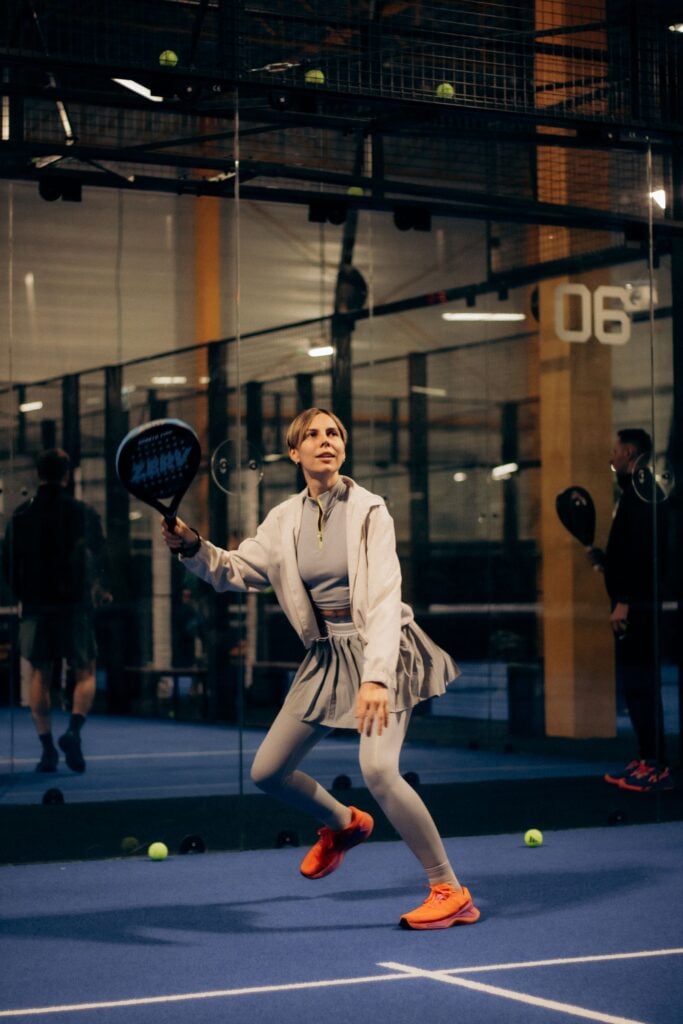
Improving your padel volley technique takes deliberate practice. These drills work whether you are training with a partner or hitting against a wall on your own.
Wall volleys. Stand 2 metres from a wall and volley the ball continuously. Focus on keeping your wrist firm and the racket face open. Aim for 50 consecutive volleys without losing control. This builds muscle memory for the compact stroke you need at the net.
Partner feed drill. Have your partner stand at the baseline and feed balls to you at the net. Alternate between forehand and backhand volleys. The goal is placement, not power - aim for specific targets on the court. Start slow and gradually increase the pace of the feeds.
Two-touch drill. Both players stand at the net and volley back and forth. The rule is simple - every shot must be a volley. This forces you to stay balanced, react quickly and keep your racket up between shots. It also builds the instinct to move together as a doubles pair.
Lob recovery drill. Start at the net in the ready position. Your partner alternates between feeding you a volley and throwing up a lob.
This trains you to hold your net position when appropriate and retreat smartly when the lob goes over your head. Knowing when to stay and when to drop back is half the battle at the net.
Advanced Volley Tactics
Once your basic volley technique is solid, the next step is learning when and where to place your volleys. Shot selection at the net separates intermediate players from advanced ones.
The drop volley. When your opponents are deep behind the baseline, a soft drop volley that barely clears the net can be devastating. Take the pace off the ball completely and let it die near the net. Your opponents have to sprint forward, giving you and your partner control of the point.
The body volley. Hitting a volley directly at your opponent is one of the most effective tactics in padel. It reduces their reaction time and makes it nearly impossible to hit a clean passing shot.
Aim for the hip area - it is the hardest zone to defend because the player has to decide between a forehand and backhand in a split second.
Cross-court angles. If you are on the right side of the court, a sharp cross-court volley to the left corner pulls your opponents wide and opens up the middle. Use this when your opponents are bunched together or when you spot a gap.
The angle does not need to be extreme - even a moderate angle creates problems when hit with good timing.
The fake and redirect. At higher levels, you can shape your body as if you are hitting one direction and redirect the volley the other way at the last moment. This works best when your opponents are already moving to cover the expected shot. It takes practice, but it is one of the most satisfying plays in padel.