
The best padel balls in 2026 are the Head Padel Pro, Wilson X3, Dunlop Pro Padel, Head Padel Pro S, Bullpadel Premium Pro and Wilson Padel Rush. Expect to pay £5-£7 per can of three. The Head Padel Pro is the official Premier Padel tour ball and the safe default; Wilson X3 lasts longer; Dunlop delivers the best value. Never use tennis balls for padel - the pressure and bounce are wrong. Most clubs supply balls included in court hire. Buy in bulk (3-4 cans) for proper home-court use; balls lose pressure within a week of opening. Last updated: April 2026.
 padel balls - the all-court reference ball used across professional events”/>
How we ranked these padel balls
We ranked these six balls by aggregating 2026 reviews from Google, Playtomic, Reddit r/padel and retailer sites, combined with manufacturer specs and UK club pro-shop pricing. Priorities for a padel ball are consistent bounce from can 1 to session 4, tournament-grade feel, durability across abrasive turf and behaviour in the specific conditions you play in (indoor vs outdoor, dry vs damp, fast vs slow court). Every ball below meets the International Padel Federation bounce spec and is a current-season product available in the UK in 2026.
At a Glance
- Head Padel Pro - best all-round ball and the safe default
- Wilson X3 - best for durability
- Dunlop Pro Padel - best value for regular players
- Head Padel Pro S - best for slow or damp courts
- Bullpadel Premium Pro - best padel-native alternative
- Wilson Padel Rush - best for beginners
1. Head Padel Pro - Best All-Round Ball
Premier Padel” class=”wp-image-2792″/>The Head Padel Pro is the most widely used padel ball in the world and the official ball of the Premier Padel tour. If you are unsure which ball to buy, this is the pick.
Bounce stays consistent from the first rally to the last, the felt wears evenly without going fluffy on one side, and it behaves predictably across artificial grass, concrete and carpet surfaces.
What you get: Pressurised can of 3 balls, tournament-grade pressure, Head signature felt.
Price and where to buy: Around £6-7 per can. Stocked at every UK club pro shop, padel retailers and Amazon UK.
Who it is for: Every player, from beginner to advanced. The default choice for league, tournament and club play.
What Other Players Say
Rating: 4.8/5 aggregated from independent padel review sites (April 2026)
Reviews consistently praise the consistency of bounce and the tournament-grade feel. Reddit r/padel threads name it the most-recommended ball for any level, and most UK club matches are played with it.
The main criticism is price - Head Padel Pro sits at the top of the retail range. Heavy-use players sometimes prefer the more durable Wilson X3 for cost per session. (source)
2. Wilson X3 - Best for Durability
The Wilson X3 was developed with Fernando Belasteguin and is built around an abrasion-resistant felt that holds its playing characteristics longer than any other ball on this list. If you burn through cans every couple of sessions, switching to X3 can meaningfully cut your annual ball spend.
Bounce and speed are slightly firmer and livelier than the Head Padel Pro.
What you get: Pressurised can of 3 balls, abrasion-resistant felt, tournament-grade pressure.
Price and where to buy: Around £6-7 per can. Sold widely through UK retailers and Amazon UK.
Who it is for: Regular players who play three or more times a week and want balls that last longer per can.
What Other Players Say
Rating: 4.7/5 aggregated from independent padel review sites (April 2026)
Durability dominates the positive reviews. Club players regularly report getting an extra session or two per can compared to the Head Padel Pro. Many UK clubs have adopted the X3 as their in-house ball for this reason.
The main negative is that the slightly firmer feel is not to every player’s taste - players who like the softer Head feel find the X3 too lively, especially on fast indoor courts. (source)
3. Dunlop Pro Padel - Best Value
Dunlop Pro Padel is the clear value pick in 2026. The compound is durable, the bounce is consistent and the flight path is stable. The performance gap between Dunlop and the premium options is small enough that most recreational players will not notice a meaningful difference. Dunlop’s decades of racket-sport experience shows.
What you get: Pressurised can of 3 balls, durable compound, solid bounce consistency.
Price and where to buy: Around £5 per can. Wide stockist network in the UK and Amazon UK bulk options.
Who it is for: Recreational players who go through a lot of balls and want to keep costs manageable.
What Other Players Say
Rating: 4.5/5 aggregated from independent padel review sites (April 2026)
Reviews praise the price-to-performance ratio. Club players on tight budgets consistently rate it the smart-money choice.
The main criticism is that high-level players notice the difference in tournament-grade feel versus Head or Wilson. Fine for club play, not the choice for serious competition. (source)
4. Head Padel Pro S - Best for Slow or Damp Courts
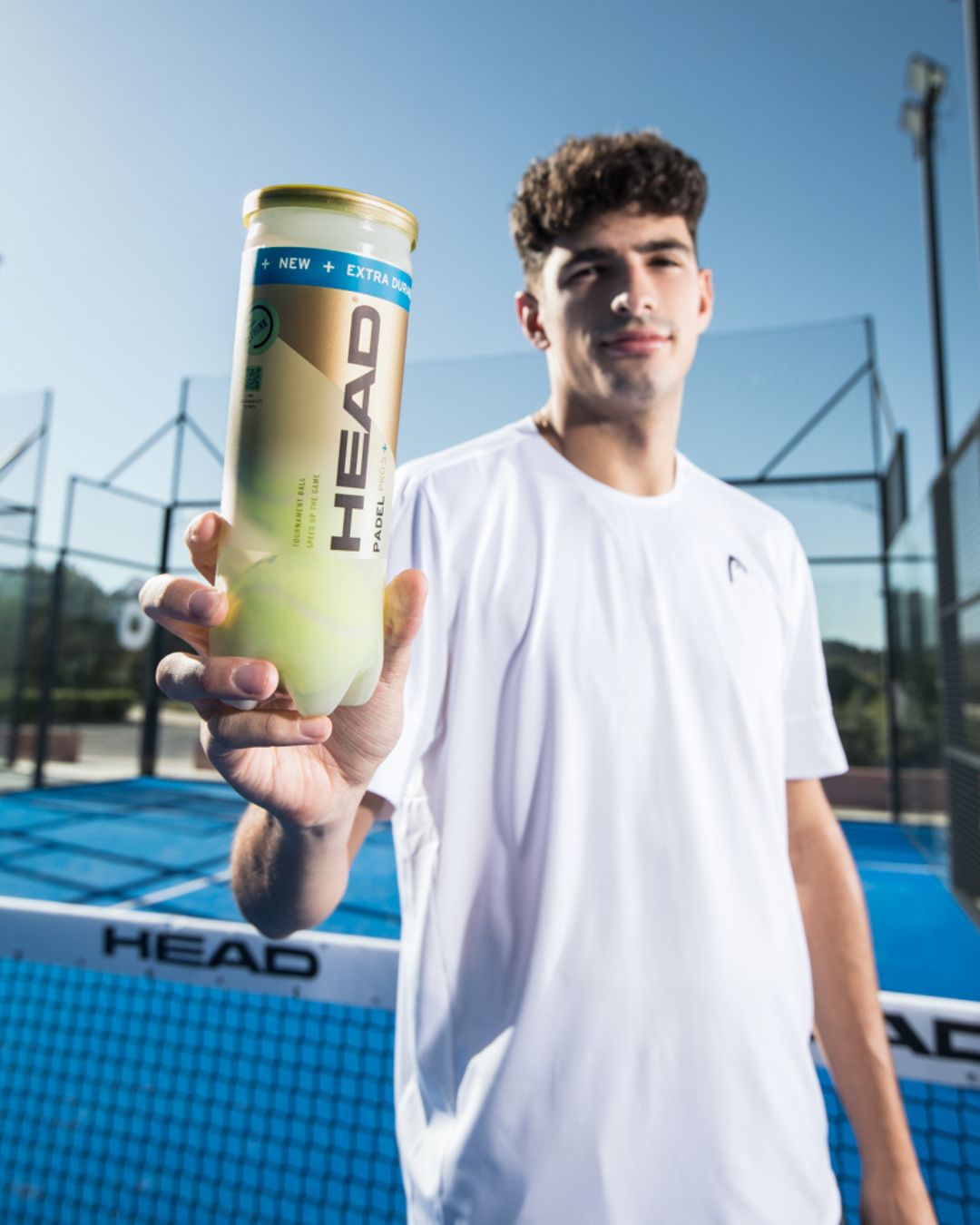
The Head Padel Pro S (Speed) is the livelier version of the standard Pro, designed for slow courts, damp conditions or heavier felt types that make balls feel sluggish. In UK winter play and outdoor venues where the turf gets heavy, the Pro S keeps the rallies at tempo.
It is not the ball you want on fast indoor courts.
What you get: Pressurised can of 3 balls, higher internal pressure than the standard Pro, faster felt.
Price and where to buy: Around £6-7 per can. UK padel retailers and Amazon UK.
Who it is for: Outdoor players in the UK, anyone in humid climates, and players on slow artificial-turf courts.
What Other Players Say
Rating: 4.6/5 aggregated from independent padel review sites (April 2026)
Outdoor players in the UK and in humid climates like Bali and Dubai consistently rate the Pro S higher than the standard version for keeping pace on heavy courts. Reviewers say the faster bounce translates directly into more engaging rallies.
The negative is that the Pro S feels too quick on fast indoor courts, where the standard Pro is the better choice. Do not use it as an all-round ball. (source)
5. Bullpadel Premium Pro - Best Padel-Native Alternative
Bullpadel is one of the biggest padel-native brands and the Premium Pro is the official ball of several national padel federations. It sits between Dunlop and Head in both price and performance - solid control, good pressure retention and the brand loyalty draw for anyone already playing with a Bullpadel racket.
What you get: Pressurised can of 3 balls, tournament-grade specs, Bullpadel-branded felt.
Price and where to buy: Around £5-6 per can. Bullpadel-stocking UK retailers and Amazon UK.
Who it is for: Bullpadel racket owners and players who like to buy their ball and racket from the same brand.
What Other Players Say
Rating: 4.4/5 aggregated from independent padel review sites (April 2026)
Reviews rate it comparable to Dunlop on performance and price. Federation-official status gives confidence for regional tournament play.
The main critique is availability - outside Bullpadel-focused retailers, stock can be patchier than Head or Wilson. (source)
6. Wilson Padel Rush - Best for Beginners
The Wilson Padel Rush is designed with beginners in mind: slightly lower internal pressure than tournament balls, slower through the air, more forgiving off the walls. Rallies last longer, which accelerates learning. Most coaches use either the Rush or the Head Padel (the same concept from Head) in beginner group coaching.
What you get: Pressurised can of 3 balls, reduced pressure, beginner-tuned felt.
Price and where to buy: Around £5 per can. Amazon UK and major padel retailers.
Who it is for: First-year players and coaching groups.
What Other Players Say
Rating: 4.4/5 aggregated from independent padel review sites (April 2026)
Coaches consistently rate the Rush as the fastest route to longer beginner rallies. Reviews from newer players praise how much easier it feels to read the ball off the glass.
The limitation is obvious: once your technique develops, the Rush feels slow. Move to the Head Padel Pro or Wilson X3 after a few months of regular play. (source)
Honourable Mentions
Adidas Speed RX - Rating: 4.3/5 aggregated from independent padel review sites (April 2026). Around £6 per can. A faster ball for advanced players on slow courts. Niche choice but excellent where it fits.
Tecnifibre Padel Team - Rating: 4.3/5 aggregated from independent padel review sites (April 2026). Around £5 per can. Solid mid-range option from a trusted racket-sport brand. Good bounce retention over 3-4 sessions.
Head Padel - Rating: 4.3/5 aggregated from independent padel review sites (April 2026). Around £5 per can. The Head equivalent of the Wilson Padel Rush - slower, beginner-friendly. A direct alternative if the Rush is out of stock.
Verified 2026 padel ball prices
| Ball | Type | Price (can of 3) | Best For |
|---|---|---|---|
| Head Padel Pro | Tournament standard | ~£6-7 | Default for every level |
| Wilson X3 | Tournament durable | ~£6-7 | Heavy-use players |
| Dunlop Pro Padel | Tournament value | ~£5 | Regular club play on budget |
| Head Padel Pro S | Speed variant | ~£6-7 | Slow or damp courts |
| Bullpadel Premium Pro | Tournament standard | ~£5-6 | Bullpadel racket owners |
| Wilson Padel Rush | Beginner soft | ~£5 | First-year players |
What to Know Before You Buy
Padel Balls Are Not Tennis Balls
Padel balls have lower internal pressure than tennis balls, which gives them a lower bounce and slower speed off the glass walls. The International Padel Federation specifies a bounce height of 135-145cm from a 2.54m drop. Tennis balls are too lively for padel courts - rallies become chaotic and unpredictable. Always use balls specifically made for padel.
Expect 2-4 Sessions Per Can
A fresh can lasts two to four sessions of recreational play before the bounce drops noticeably. Competitive matches always use a fresh can. You can tell a ball has lost pressure by squeezing it - a fresh ball resists firmly, a dead ball compresses easily. Once felt goes fluffy on one side and bounce feels low, replace the can.
Match the Ball to Your Court
On fast indoor courts, use the standard Head Padel Pro or Wilson X3. On slow outdoor courts, heavy turf or damp conditions, switch to a Speed variant like the Head Padel Pro S. Most players keep two types of ball in the kit bag to match conditions. Your playing level does not matter here - the court does.
Buy in Bulk If You Play Regularly
A box of 24 cans (72 balls) typically saves 15-20% versus individual cans. If you play once a week or more, bulk buying is the most economical option. Store sealed cans at room temperature away from direct sunlight - pressurised cans hold their internal pressure for months when unopened.
Balls for Hot and Humid Climates
In humid climates - Bali, Dubai or UK summer play - pressurised cans still perform normally but balls degrade faster after the seal is broken. Store opened cans in a ball pressuriser tube to extend life.
For slow or heavy turf in hot weather, the Head Padel Pro S keeps the pace of play up. See our guide to the best padel gear for hot and humid climates for the full kit breakdown.
Padel ball FAQ
Can I use tennis balls for padel?
No. Tennis balls have higher internal pressure and bounce too high for padel courts. The enclosed glass walls make the game unplayable with tennis balls - they become too fast and unpredictable. Always use balls specifically designed for padel.
What is the best padel ball for beginners?
The Wilson Padel Rush or Head Padel are softer and slower than tournament balls, giving you more time to react and more forgiveness off the walls. Use them for your first few months. Once you are comfortable with the pace of the sport, move up to the Head Padel Pro or Wilson X3.
How long do padel balls last?
A fresh can lasts two to four recreational sessions before the bounce drops. Competitive players open a new can every match. Between sessions, a pressuriser tube holds internal pressure and extends the usable life of opened balls.
What padel balls do the professionals use?
The Head Padel Pro is the official ball of the Premier Padel tour and is used at the top level of professional competition. Wilson X3 is used in several other circuits. Both are widely available for recreational purchase.
How much do padel balls cost?
What is the difference between standard and Speed padel balls?
Speed variants have slightly higher internal pressure, giving a livelier bounce and faster pace. They are designed for slow courts or damp conditions where standard balls feel sluggish. On fast indoor courts, standard balls are the better choice for control.
Should I store balls in a pressuriser tube?
Only worth it if you play infrequently - once a week or less - and want to extend the life of opened cans. For regular players who open a fresh can every few sessions, a pressuriser is unnecessary. For occasional or holiday players, it roughly doubles the usable life of opened balls.
Do padel balls expire if I never open the can?
Not really. A sealed pressurised can holds its pressure for several years if stored at room temperature away from direct heat or sunlight. Most brands stamp a production date rather than an expiry. A can bought today will play fine in three years if unopened.
