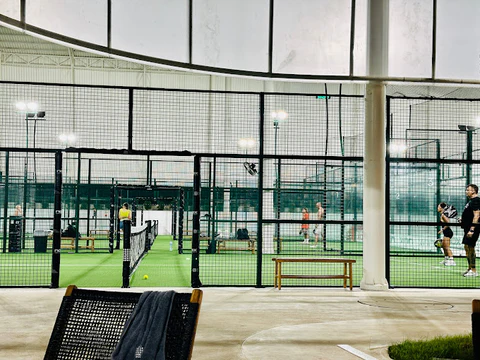
The mental game separates good padel players from champions. Mastering focus, managing nerves and developing consistent pre-point routines are essential for competitive success. This guide covers visualisation (mentally rehearsing rallies before they happen), tactical breathing (4-7-8 patterns to reset between points), positive self-talk to interrupt tilt, and pre-match routines that prime confidence. Common pressure traps include rushing returns, over-hitting, and crumbling at 4-4. Champions stay process-focused rather than score-watching, communicate constantly with their partner, and rebuild after errors instead of dwelling. Apply these techniques in match-pressure drills, not just in your head. Last updated: April 2026.
Reviewed for accuracy by Ryan Spence, Padeli co-founder and movement specialist. The advice here is general sport-psychology guidance for managing match pressure, not a substitute for professional mental-health support. If you experience persistent anxiety, panic or low mood that affects daily life, speak to your GP or a qualified clinician. The NHS guidance on mental health is a good starting point.

Padel’s fastest rallies are won or lost between the ears, not just on the court. You can have perfect technique and excellent footwork, but if your mind wanders during big points or nerves take over before a big match, you’ll leave points on the table.
The mental game separates good players from champions. We’ve watched countless competitive padel tournaments, and the pattern is clear: the player who manages pressure better, resets faster after mistakes, and stays focused on what they control almost always wins. This guide walks you through the mental strategies that professional padel players use to perform under pressure.
Why Your Mental Game Matters More Than You Think
Padel is unique. Unlike tennis’s long baseline rallies, padel’s quick exchanges and tight courts mean points shift in seconds. A momentary lapse in focus costs you the rally. A bad call or missed opportunity compounds frustration, and frustration clouds your next shot.
Research shows losing players demonstrate higher anxiety levels and lower self-confidence after matches, often due to emotional distress following underperformance. That spiral is avoidable. The difference between players at the same technical level is almost always mental resilience - how they handle nerves, bounce back from errors, and stay composed when stakes are highest.
Your mental approach directly influences your technical performance. Staying present sharpens your decision-making. Controlling what you can control (your effort, attitude, and strategy) stops you wasting energy on things you can’t. That’s where matches are won.
Pre-Match Preparation: Setting Yourself Up for Success
Every top athlete knows a solid pre-match routine signals to your brain “It’s game time.” This routine anchors your nervous system, cuts anxiety, and prepares your body and mind for peak performance.
Your pre-match routine doesn’t need to be long. In fact, 20 - 30 minutes is ideal - enough time to move your body, centre your thoughts, and get ready without overthinking outcomes. Include these elements:
Visualisation
Close your eyes and mentally rehearse playing confidently. Picture yourself moving fluidly around the court, hitting your favourite shots with precision, and staying composed under pressure. See the ball coming toward you, feel your weight transfer, and watch it go exactly where you want. Visualisation primes your nervous system and builds confidence before you step on the court.
Breathing work
Deep, controlled breathing calms your nervous system and resets your focus. Try the 4-7-8 technique: breathe in through your nose for a count of 4, hold for 7, exhale for 8. This ratio shift (longer exhales than inhales) activates your parasympathetic nervous system - your body’s natural brake. Do this 3 - 5 times before walking on court.
Positive self-talk
Don’t think “I hope I don’t miss this serve.” Instead, say “I’ve hit this serve a hundred times before.” Replace doubt with affirmations grounded in your actual experience. Your inner dialogue shapes your confidence - make it work for you, not against you.
Clear tactical intentions
Discuss with your partner: What’s your game plan? Who takes centre? What shots are you comfortable with? Who covers the baseline? Clarity reduces mid-match confusion and builds trust between partners.
Managing Match Nerves: The Controllables Framework
Nerves are normal. Every player at every level feels them. The skill is channelling that energy into focus rather than letting it leak into doubt.
One powerful mental frame is the “controllables” approach. You cannot control your opponent’s skill, the court conditions, or line calls. You can control your effort, strategy, attitude, and composure.
Spend your mental energy here. When you notice your mind drifting to the opponent’s strengths or outcome pressure, gently redirect: “That’s not mine to control. What can I do right now?”
This refocus works because it’s true. You have no influence over external factors. Trying to control them wastes mental energy and amplifies anxiety. Focusing on your controllables calms nerves and sharpens decision-making.
Another proven technique: the “just this point” frame. When pressure mounts, the entire match feels heavy. Narrow your focus to a single point. Tell yourself “Just this point” - not the next three games or the tournament. One point. That weight lifts instantly. Repeat this for the whole match, and you’ll be surprised how calm you stay.
Partner Communication: Your Secret Weapon for Mental Stability

Padel is a doubles sport, and chemistry reduces stress dramatically. A partner who communicates clearly and encourages you after mistakes strengthens your confidence and emotional control.
Clear verbal signals during rallies matter for more than just technique - they anchor your mind in the present. Call out “yours” or “mine” to avoid confusion, and use commands like “switch” or “leave” during fast exchanges. This talking keeps both of you engaged and prevents the mental drift that breeds mistakes.
Non-verbal communication matters too. Make eye contact between points. A nod or thumbs-up after a tough hold reinforces trust. Hand signals behind your back (a closed fist for straight, open palm for cross-court) let you coordinate without tipping off opponents. These rituals feel small, but they anchor you mentally and strengthen partnership cohesion.
Before the match, discuss roles clearly. Who takes centre? Who’s comfortable at the baseline? What’s your defensive wall strategy? Knowing your job removes doubt mid-rally and lets you focus on execution rather than coordination. Trust your partner, and your partner’s confidence will buoy yours when things get tight.
Staying Focused During Points: Techniques That Work
Focus is a skill, not a gift. You build it through deliberate practice and specific techniques.
The breath anchor
Proper breathing during rallies isn’t optional - it’s foundational. If you don’t breathe properly during intense exchanges, you’ll run out of breath, lose energy, lose focus, and lose the rally. Practice diaphragmatic breathing (breathing from your belly, not your chest) so it becomes automatic.
On big points, take one slow, deliberate breath before serving or receiving. That single breath steadies your nervous system.
Single-point presence
Between every point, reset. Take three deep breaths. Adjust your grip. Walk to the baseline slowly. This 10 - 15 second routine signals to your brain: we’re starting fresh. No carryover from the last rally, whether you won or lost it. The previous point is information only - not emotion. Your mind is clear for the next one.
Routine as a psychological anchor
A consistent between-point routine (same breathing pattern, same walk, same grip adjustment) becomes a psychological anchor. Your brain learns: when this routine happens, it’s time to focus. By the match’s end, this anchor is so powerful that executing the routine itself calms your mind and sharpens your attention.
Recovering After Mistakes: The Resilience Factor
Every player makes mistakes. Professionals make plenty. The gap between good and great is recovery time - how quickly you move past the error mentally.
The key is perspective. Each mistake is feedback about positioning, shot selection, or decision-making. It’s not a referendum on your ability. See losing streaks not as evidence of weakness but as patterns to refine. Top players treat losses as data.
Immediately after an error, do this: take a breath, make eye contact with your partner, and say a reset word like “next”, “focus” or “go”. This three-part reset (physiological, social, verbal) interrupts the spiral of frustration and refocuses your mind on the present point.
Don’t dwell on what you did wrong mid-match. Save the analysis for after. Right now, you’re executing, not evaluating. This mental discipline - staying in the moment rather than reviewing - is the mark of mental toughness.
A positive inner dialogue (“I can do this,” “Focus on the next point”) shifts momentum mid-match. Replacing negative self-talk with constructive affirmations strengthens your confidence and emotional control. After a mistake, tell yourself what’s true: “I’ve hit this shot a thousand times. Next point, I’m executing it.”
Building Mental Toughness: A Long Game
Mental toughness isn’t about being emotionally cold. It’s about managing nerves, resetting quickly after setbacks, and making calm decisions when stakes are highest. It’s built through repeated practice in pressured situations.
One powerful tool is simulated pressure training. Practice matches where you pretend the score is higher stakes than it is. Play tiebreaks. Play with specific score situations (“down 4 - 6, must win this game”). The more you expose yourself to pressure in practice, the less intense it feels in real matches.
Work with your partner on partner communication drills: practice lobs and switches, practice defensive wall shots with alternating roles, build routines for smash follow-ups. Repetition makes communication second nature. When communication is automatic, your mind is free to focus on strategy and execution rather than coordination.
After matches (wins or losses), reflect. What worked mentally? When did you lose focus? When did pressure get the better of you? What reset techniques were most effective? This isn’t self-criticism - it’s building your mental toolkit. Each match teaches you something about your mind, if you’re paying attention.
FAQ
Key Takeaways
The mental game of padel is learnable. You don’t need to be naturally gifted at managing pressure - you need to practise it deliberately. Build your pre-match routine, master the “controllables” frame, develop a consistent between-point reset, and treat every match as an opportunity to strengthen your mental toolkit.
Your partner is your ally, not your pressure. Clear communication reduces anxiety and anchors your focus. Your breathing is your tool - use it before matches, during tense rallies, and after mistakes.
Most importantly: mental toughness is built through repetition in pressured situations. Practise these techniques in casual matches so they’re automatic when stakes are high. The player who manages their mind better almost always wins.