A 60-minute padel session burns roughly 400-600 calories for a 70 kg player (an estimate, as few studies measure it directly), keeps your heart rate in a moderate aerobic range, and works most major muscle groups, with a smaller court and shorter sprints than singles tennis. Some studies point to cardiovascular, strength, balance and mental-health gains, and published injury rates range from roughly 3 to 8 per 1,000 hours of play. The doubles format builds social connection alongside the workout, which research links to long-term wellbeing. Many over-50s and players returning from injury find padel a good option, though check with your GP or physio first.
Reviewed for accuracy by Ryan Spence, Padeli co-founder and movement specialist. The figures here are general fitness and population estimates, not personalised medical advice. Speak to your GP or a qualified physiotherapist before starting any new sport, especially if you have cardiovascular, joint or musculoskeletal concerns. The NHS guidance on physical activity sets out the general baseline: adults should aim for at least 150 minutes of moderate activity a week.
Why padel has become a serious health choice, not just a trend
At Padeli.com we track where new players are coming from across our five core markets (the UK, UAE, USA, Bali and wider Indonesia), and one pattern keeps showing up: people are choosing padel for their health, not just for the social side. Runners are switching over to protect their knees.
Gym regulars are swapping solo sessions for doubles. Parents are bringing the whole family down to club nights.
The reason it sticks where other fitness plans fail is simple: padel combines exercise with socialising. You are turning up because your mates are there and there is a scoreboard, not because you have promised yourself thirty minutes on a treadmill. That makes it easier to sustain, and sustained exercise is what actually moves the needle on long-term health.
The science is catching up. A growing body of peer-reviewed research now measures exactly what padel does to your body and your brain, from calorie burn and heart-rate response through to balance, cognition and mood.
This guide walks through each of those benefits, what the numbers actually say, and how to get the most out of your sessions. For staying on court long-term, also see our guide to padel injuries, prevention and recovery.
Calorie burn: how much padel actually torches

The most common question we get is a practical one: how many calories am I actually burning out there? The honest answer is that it depends on your body weight, the intensity of play and how long the rallies run, but there is a clear range.
Direct measurements are limited, and sports-medicine reviews describe padel’s energy demand as poorly studied. A common working estimate is around 500 calories an hour for a 70-kilogram player, in a rough range of 400 to 600, with competitive play at the higher end.
A 70-kilogram player in a relaxed doubles match should expect somewhere around 500 calories an hour. Add in deep rallies, more time at net and a bit of competitive edge, and you will edge into the higher end of that range.
The quirk is that padel rarely feels like work - you are tracking the ball and chatting to your partner between points, so the expenditure feels incidental rather than punishing.
Cardiovascular benefits and heart-rate zones
Studies of amateur players report an average heart rate of around 130 beats per minute, which is roughly 50 to 70% of maximum heart rate. That is a moderate aerobic load, the kind of effort commonly recommended for general cardiovascular fitness.
Padel is generally a more moderate cardiovascular load than squash. That is useful for people returning to sport, training around a health condition, or wanting consistent weekly exercise without extreme intensity.
It also means most people can play two or three times a week without needing long recovery windows.
The compounding effect matters most. Play regularly for a few months and resting heart rate drops, aerobic capacity rises and everyday tasks start feeling easier.
These are the same adaptations people chase with structured cardio plans, but here you are getting them inside a game you actually enjoy. Once you are comfortable with the basics, our intermediate improvement guide shows how to lift rally intensity safely.
Joint health and injury risk

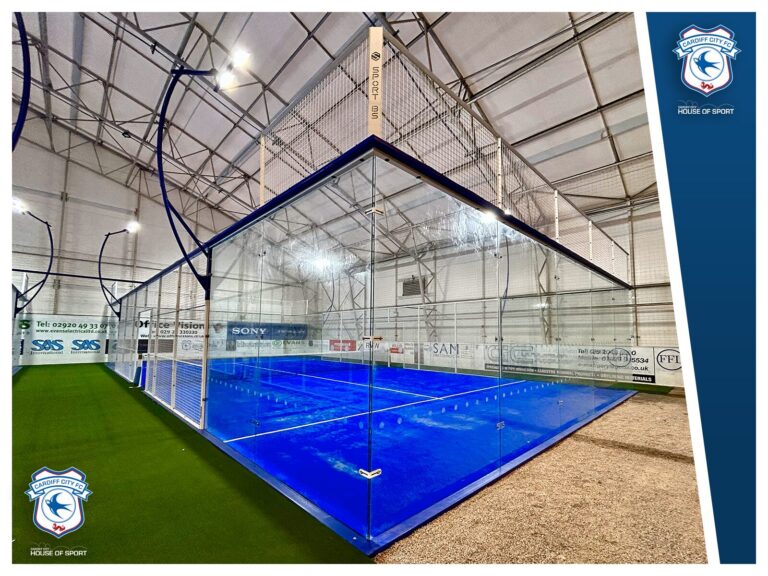
One of the most underrated health arguments for padel is what it does not do to your joints. The court is only 10 by 20 metres, the doubles format halves the ground each player has to cover, and the walls keep balls alive for longer, which means shorter repeated efforts instead of long baseline sprints.
For many players, knees, ankles and hips take a gentler loading than in tennis singles or running.
Published padel injury studies report roughly 3 to 8 injuries per 1,000 hours of play, depending on the cohort and how injuries are counted.
That makes padel an option worth discussing with your GP or physio if you are managing long-term knee or lower-back issues, and a sport many people keep playing into their fifties, sixties and beyond.
There is one honest caveat. Early epidemiology suggests padel carries a slightly higher rate of elbow and shoulder issues, driven by the repeated arm work and the sudden force of wall play.
The fix is not to avoid padel, but to build technique and conditioning from the start - our injury-prevention guide covers the warm-up routine, elbow protocols and recovery habits that keep these problems rare.
Total-body fitness: legs, grip, core, balance
Padel is not a narrow cardio workout. Some small studies on padel players point to gains across a mix of fitness markers, and many players report feeling stronger within a few months of starting.
Your legs do most of the work. The constant split-steps, lateral shuffles and direction changes load the quads, glutes and calves in patterns a treadmill cannot replicate. Some small studies suggest improvements in sprint speed and single-leg stability after regular play.
Your grip and forearms build quickly. Repeated racket work plus the torque you generate on serves and topspin shots drives real forearm, wrist and grip-strength gains. That matters well beyond the court - grip strength is one of the best single predictors of overall physical health in older adults.
Your core works every single point. Every rotation, lateral push and return-of-serve is a core-driven movement, and some small studies suggest regular padel players develop stronger lumbar isometric endurance - essentially a more stable, more resilient lower back. For desk-based workers this is one of the quickest wins the sport delivers.
Put it all together - sprint speed, grip strength, spinal stability, core control and balance - and you end up with true full-body conditioning. That is why many players quietly drop their gym membership within a few months of taking up padel.
Mental health, cognition and the social dose
The physical benefits are the easy part to talk about. The mental-health benefits might matter more over a lifetime - and padel stacks the deck in your favour on multiple fronts at once.
Confidence rises quickly. Padel has one of the flattest learning curves in racket sport, which means new players see improvement inside three or four sessions. That feedback loop - turning up, playing better, winning points - is a proven driver of self-efficacy, which is one of the strongest predictors of sticking with exercise long-term.
Moderate-intensity exercise has been linked to higher levels of brain-derived neurotrophic factor (BDNF), a protein that supports brain plasticity, memory and mood regulation. Padel-specific research is still young, but the broader literature on tennis and squash points in the same direction.
The social element is the underrated multiplier. Padel is almost always played as doubles, which means every single session includes partner coordination, banter between points, and a built-in community you turn up to. Regular social physical activity is associated with lower rates of loneliness, anxiety and depression - padel delivers that by design, not as a bonus.
Many players also describe a flow-state effect. The tempo, the angles, the need to track four players and a moving ball all pull attention fully into the present moment. For people who struggle to switch off, padel often works better than meditation apps because the game demands focus rather than asking for it.
Who benefits most from padel
Padel is unusually accessible for a racket sport, which means the health benefits land across a range of ages, fitness levels and goals. Five groups consistently see the biggest gains:
Older adults. Low joint impact, doubles format and a strong club community make padel a rare sport people can start in their 60s. Plenty of players in our core markets are still playing competitive box leagues into their 70s.
People returning from injury. The ability to control intensity, rally at a manageable pace and still get a meaningful cardio dose can make padel a gentler way back into sport - ideally alongside, not instead of, guidance from a physio.
Sedentary starters. If you have not exercised regularly in years, padel is far less intimidating than the gym. You improve inside a few sessions, you are not alone on the court, and the environment is forgiving of beginner errors.
Fitness enthusiasts looking for variety. Padel plugs in neatly alongside strength training, running or cycling. The lateral movement, grip work and mental demand add qualities that structured gym plans rarely cover.
People managing stress or mild anxiety. The combination of moderate cardio, social connection and a tight attentional focus is well matched to the research on exercise as a mental-health intervention.
The gender-inclusive advantage
One of the quieter but more important facts about padel is how gender-balanced it is. Around 40% of amateur players are women, according to the FIP World Padel Report 2025, which makes padel one of the more gender-balanced racket sports.
That is not a marketing line - it changes who turns up, who keeps playing, and who ends up seeing the long-term health benefits.
When a sport is balanced, women are not forced into a small minority playing primarily against men. They play with and against other women at every level, and mixed doubles is common rather than the exception. That creates real community instead of tokenistic inclusion, and community is what keeps people on court week after week.
The doubles format also softens the intimidation factor for beginners. You are never exposed alone on a court, a stronger partner can cover you for the first few weeks, and the scoring system rewards consistency over raw power. The result is a sport that converts trial sessions into regular players at a much higher rate than most racket sports.
How to actually maximise the health benefits
Knowing padel is good for you is one thing. Translating that into real fitness gains requires a bit of structure. These are the habits that separate players who see big health dividends from those who plateau quickly.
Play twice a week, minimum
Once a week will maintain fitness. Twice a week is a sensible frequency for building cardiovascular fitness and strength and for managing weight over a few months. Three times is a genuine training dose; beyond that, you need to think about load management.
Warm up properly, especially the shoulder and elbow
Five to ten minutes of light cardio plus dynamic mobility work for the shoulders, hips and spine is not optional. Add some band work for the shoulder and a couple of easy service practice rallies before ramping up. This single habit helps cut the risk of elbow-related complaints.
Prioritise technique, not power
Early coaching is one of the best investments new players can make. A few lessons lock in correct grips, footwork and wall technique, which lets you play harder later without breaking down. Power without technique is how shoulders and elbows get hurt.
Wear proper court shoes and hydrate
Do not play in street trainers. Padel-specific shoes stabilise the ankle on sudden lateral shifts and grip the artificial turf correctly. Pair that with decent hydration, especially in hot-climate markets like Bali and Dubai, and you reduce injury risk.
Play with people slightly better than you
Playing with stronger opponents lifts your heart rate, sharpens your decision-making and pulls technique up faster. Just avoid always being the weakest of four - being stretched is useful, being overwhelmed is demoralising.