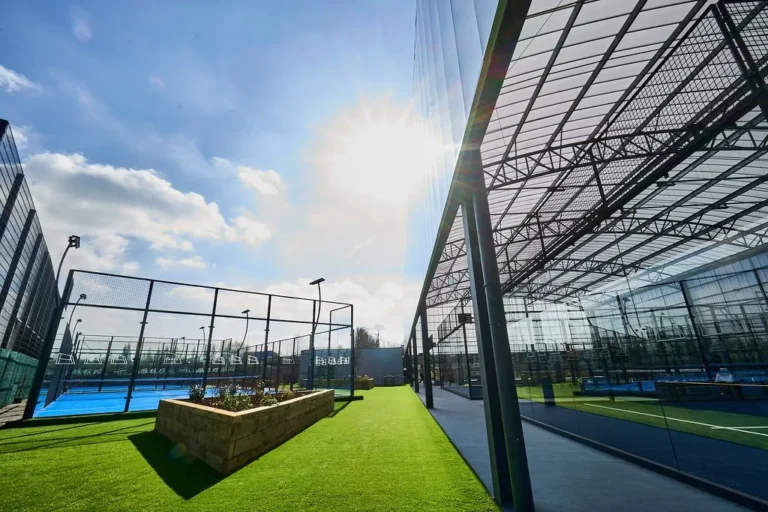
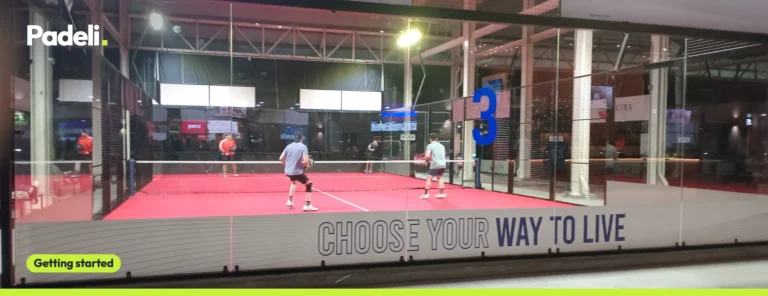
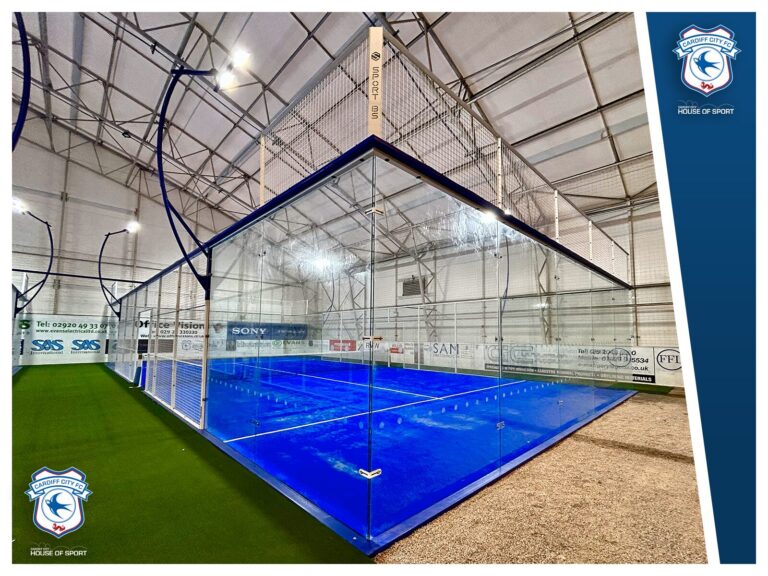
Padel and pickleball are the two fastest-growing racket sports in the world, but they are very different games. Padel uses enclosed glass courts (20m x 10m) and is always doubles; pickleball uses a smaller open court (13.4m x 6.1m) and can be singles or doubles. Padel rackets are solid-faced (no strings); pickleball uses a paddle and a perforated plastic ball. Padel rallies are typically longer and more athletic; pickleball is faster and easier to pick up but more limited in shot variety. This guide breaks down every key difference to help you decide.
Links to retailers on this page are affiliate links. If you buy through them, Padeli may earn a small commission at no extra cost to you. It never affects which products we recommend or how.
Two sports, very different origins
Padel was invented in Mexico in 1969 by Enrique Corcuera, who built the first court at his home in Acapulco. The sport then spread to Spain and Argentina in the 1970s and 1980s, where it became a mainstream activity played by millions. Today, Spain alone has more than 17,000 courts and over 6 million active players.
Pickleball was invented in the United States in 1965 on Bainbridge Island, Washington, by Joel Pritchard, Bill Bell and Barney McCallum. It was designed as a backyard family game and remained a casual American pastime for decades before experiencing explosive growth from around 2020 onwards.
Pickleball has since spread internationally, with the International Pickleball Federation (IPF) now counting more than 80 member countries.
The origins matter because they shape how each sport feels today. Padel has a distinctly European and Latin American character - social, club-based and deeply embedded in those cultures. Pickleball has a more American, community-driven identity. Both are welcoming to beginners, but the vibe is noticeably different.
Court and Playing Area
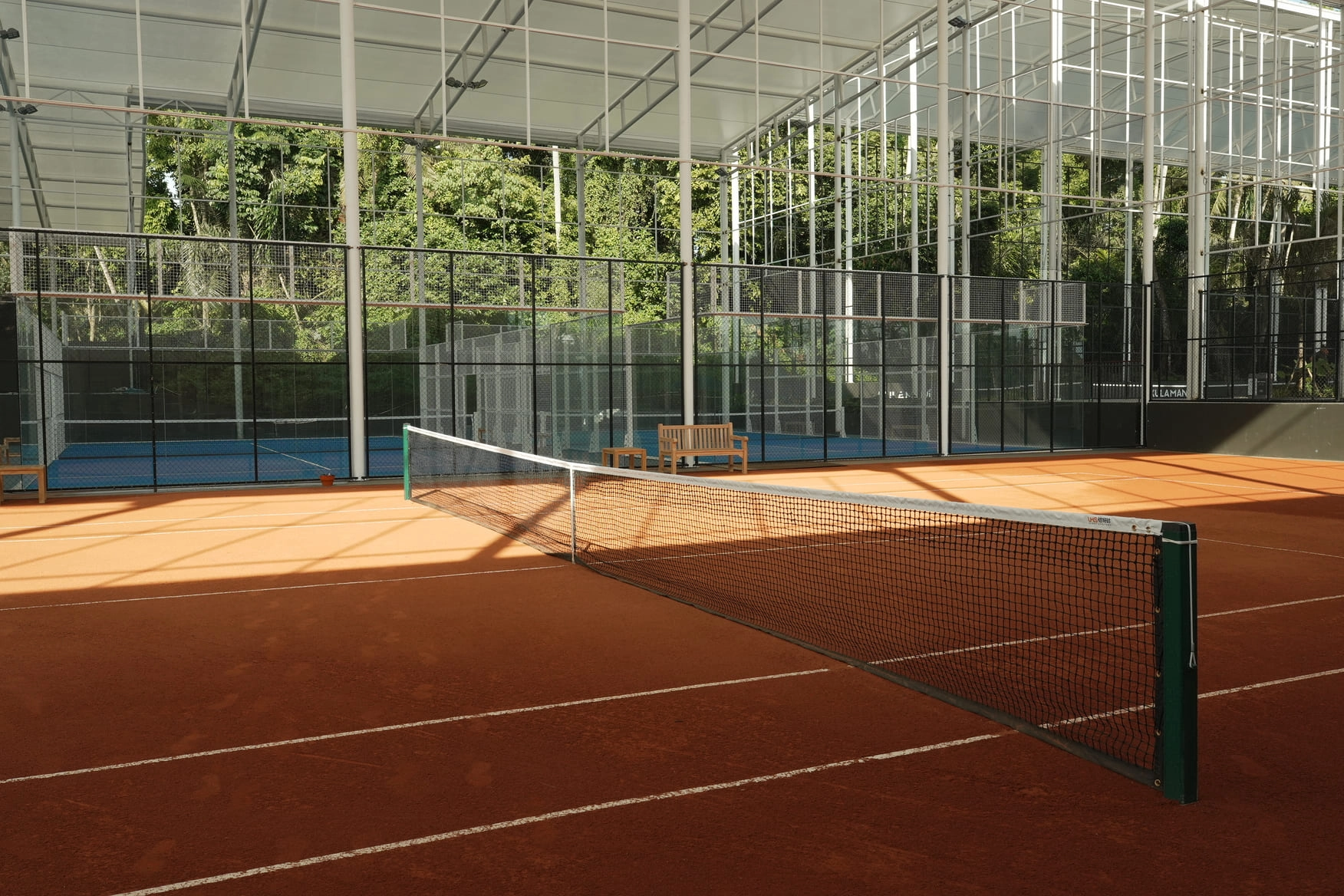
This is the single biggest difference between padel and pickleball, and it affects everything about how each sport plays.
A padel court measures 20 metres long by 10 metres wide and is fully enclosed by walls - typically glass at the back and sides, with mesh fencing above. The walls are in play, meaning the ball can bounce off them and still be returned, similar to squash.
This creates longer rallies, more angles and a unique tactical dimension that no other racket sport offers.
A pickleball court is much smaller at 13.4 metres long by 6.1 metres wide - roughly the same dimensions as a doubles badminton court. There are no walls.
The court has a non-volley zone (the “kitchen”) extending 2.1 metres from each side of the net, where players are not allowed to hit the ball out of the air. This kitchen rule is central to pickleball strategy and creates a very different style of play from padel.
Because padel courts require glass walls and specialised construction, they are more expensive to build. Pickleball courts can be painted onto any flat surface - including existing tennis courts - making them much cheaper and faster to set up. This is one reason pickleball has spread so quickly in North America, where existing tennis infrastructure has been repurposed.
Equipment Compared

Both sports use solid rackets (no strings), but the designs are quite different.
A padel racket is round or teardrop-shaped, roughly 45cm long, made from carbon fibre or fiberglass with a foam core. It has small holes drilled through the face to reduce air resistance.
Padel rackets typically cost between 50 and 300 euros depending on the level. If you are looking for recommendations, our guide to the best padel rackets for beginners is a good starting point.
A pickleball paddle is flat and rectangular, typically 38 to 43cm long, made from composite materials or carbon fibre with a polymer honeycomb core. Unlike padel rackets, pickleball paddles have no holes. They are generally lighter and cost between 30 and 250 dollars.
The balls are also very different. Padel uses a pressurised rubber ball similar to a tennis ball but with slightly less pressure, giving it a lower bounce. We explain exactly how the two compare in padel balls vs tennis balls.
Pickleball uses a hollow plastic ball with holes punched through it - essentially a modified wiffle ball. The pickleball moves more slowly through the air, which makes the sport accessible to a wider range of ages and fitness levels but also means rallies have a different rhythm.
Rules and Scoring
Padel uses tennis-style scoring: 15, 30, 40, deuce, advantage. Matches are typically best of three sets, with each set played to six games. There is a lot of familiarity here for anyone who has played or watched tennis. For a complete breakdown, our padel rules guide covers everything you need to know.
Pickleball uses rally scoring or traditional side-out scoring (depending on the format), with games played to 11 points and a win-by-two requirement. In traditional pickleball scoring, only the serving side can score points. The professional tour has been experimenting with rally scoring, where either side can score on any point, to make matches faster and more spectator-friendly.
Serving in padel is always underarm and must bounce before being hit. In pickleball, the serve is also underarm but hit directly out of the air (no bounce). Both sports start each point with an underarm serve - a key difference from tennis and one reason both sports are so beginner-friendly.
One major rule difference: padel is always played as doubles. You cannot play singles padel (outside of very rare exhibition formats). Pickleball can be played as singles or doubles, which gives it more flexibility for players who do not always have four people available.
Gameplay and Strategy
The feel of playing each sport is quite different, even though both are racket sports played on smaller courts.
Padel is characterised by long rallies, wall play and positional strategy. Because the ball stays in play off the glass walls, points tend to be longer and more tactical. Good padel is about patience, positioning and waiting for the right moment to attack - usually with a smash or a volley at the net.
The wall play adds a third dimension that takes time to learn but makes the sport uniquely engaging. Compared to tennis, padel rewards touch and placement over raw power.
Pickleball is more about quick reactions, soft hands and net play. The non-volley zone (kitchen) means players cannot charge the net and volley everything. Instead, there is a constant battle to earn the right to move forward using soft “dink” shots that just clear the net.
When opportunities arise, players can speed up the ball with drives or overhead smashes. The smaller court means there is less running but more emphasis on reflexes and hand-eye coordination.
In simple terms: padel feels like a more physical, full-body workout with longer rallies and more court coverage. Pickleball feels quicker, more compact and more accessible to people who may not want or be able to cover a larger court.
Fitness and Physical Demands
Both sports provide excellent exercise, but padel is the more physically demanding of the two.
A typical 90-minute padel session burns between 500 and 700 calories, depending on the intensity. Players cover more ground, rallies are longer and the combination of lateral movement, sprinting and overhead smashes gives a comprehensive full-body workout. For more on the fitness side, our article on the health benefits of padel goes into detail.
Pickleball is lower impact and less physically intense, which is part of its appeal. A 60-minute session burns roughly 250 to 400 calories.
The smaller court means less running, and the lighter ball means less strain on joints and muscles. This has made pickleball particularly popular with older adults - though the average player age is trending younger every year, now sitting at around 35 in the United States.
Neither sport is “better” on the fitness front. If you want a high-intensity workout that challenges your whole body, padel has the edge. If you want something gentler on the joints that still gets you moving, pickleball is the more forgiving option.
Global Popularity and Growth
Both sports are growing fast, but in different parts of the world.
Padel has more than 35 million players worldwide across 150 countries, according to the FIP World Padel Report 2025. There are now over 77,000 courts globally, with more than 14,000 built in 2025 alone - a 15% increase in a single year.
The sport is strongest in Spain, Argentina, Italy, Sweden and the Middle East, and is expanding rapidly into new markets including the UK, USA, and Southeast Asia. The International Padel Federation lists 100 member federations in its own directory as of September 2026.
Pickleball has an estimated 50 million players globally, though the vast majority are in North America. In the United States alone, 24.3 million people played pickleball in 2025 - a 171% increase over three years.
The country now has more than 50,000 pickleball courts (counting dedicated and lined-over multi-use courts). Internationally, the sport is growing in India, Australia, the UK and parts of Europe, but it remains overwhelmingly an American phenomenon for now.
In terms of professional infrastructure, both sports are investing heavily. Padel has the Premier Padel tour (backed by the FIP and Qatar Sports Investments), while pickleball has Major League Pickleball and the Professional Pickleball Association, with TV deals on ESPN and CBS Sports.
Cost to Play
Pickleball is generally cheaper to access, mainly because court infrastructure is simpler and many public courts are free to use.
In the United States, thousands of public pickleball courts in parks and recreation centres are free. Private club courts typically charge 5 to 15 dollars per person per session. Paddles cost 30 to 250 dollars, and balls are a few dollars each.
Padel court rental varies by country. In Spain, it averages 15 to 25 euros per hour (roughly 4 to 6 euros per person when split four ways). In the UK, expect 30 to 60 pounds per hour.
In premium markets like Singapore or Dubai, it can go higher. Padel rackets cost 50 to 300 euros, and balls cost around 5 to 7 euros for a can of three.
The biggest cost difference is in court construction. Building a padel court costs between 25,000 and 60,000 euros, while a pickleball court can be set up for as little as 5,000 to 15,000 dollars - especially if you are converting an existing tennis court. This infrastructure gap is a significant factor in how quickly each sport can expand.
Which Sport Should You Try?
The honest answer is: try both if you can. They are different enough that enjoying one does not mean you will not enjoy the other.
Choose padel if you want a more athletic, tactical game with longer rallies and a unique wall-play dimension. Padel is ideal if you enjoy doubles play, have a tennis or squash background, or want a sport that provides a serious workout. The social, club-based culture around padel is also a big draw for many players.
Choose pickleball if you want something more immediately accessible, gentler on the body and easier to find a court for (especially in North America). Pickleball is great if you want a sport you can play with people of all ages and fitness levels, prefer the option of playing singles, or want to start with minimal equipment investment.
If you are leaning toward padel and want to get started, our beginner’s guide to padel will walk you through everything you need for your first session.
What you need to start playing
You do not need much kit for either sport, and most clubs hire out rackets or paddles for your first few sessions. Once you know you enjoy it, this is what we would buy, at October 2026 prices.
Starting padel
- Racket. The Wilson Optix V1 is £50.96 at Padel Nuestro. It is round, soft and forgiving, which is exactly what you want while you learn, and our cheap padel rackets guide has more good options under £65.
- Balls. A can of three Head Padel Pro is £5.06, and one can will see you through a few games.
- Shoes. Padel courts are artificial grass with sand brushed into them, so a sole with a zigzag tread grips far better than a running shoe. The Asics Sonicsmash FF is £80.71 and is the best value pick in our padel shoes guide.
That comes to about £137 for everything (roughly $180 or €161), or around £56 for just the racket and balls.
Starting pickleball
- Paddles. The Head Flash pickleball pack is £76.46 at Padel Nuestro and comes with two paddles, two balls and a bag, so you and a friend are ready to play.
- Balls. A can of three Head Championship 40 outdoor balls is £8.46, and they are approved for tournament play in the US.
- A better paddle. When you want something more precise, the adidas RX CTRL is £50.96 at Padel Nuestro, down from £84.96. You will also find plenty of starter sets on Amazon.
Pickleball is less demanding on footwear, so a pair of court or tennis shoes you already own is fine to start with.